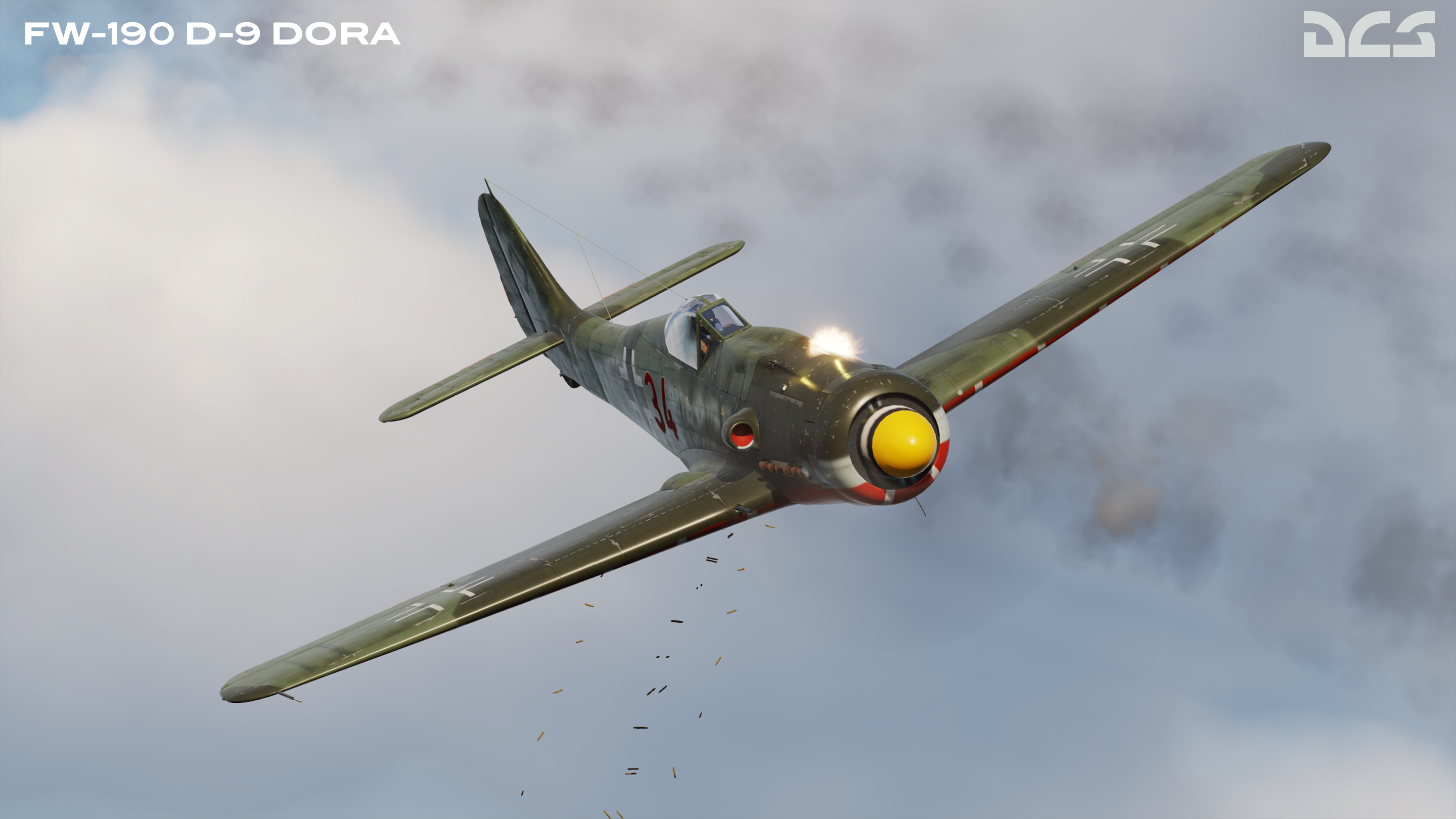
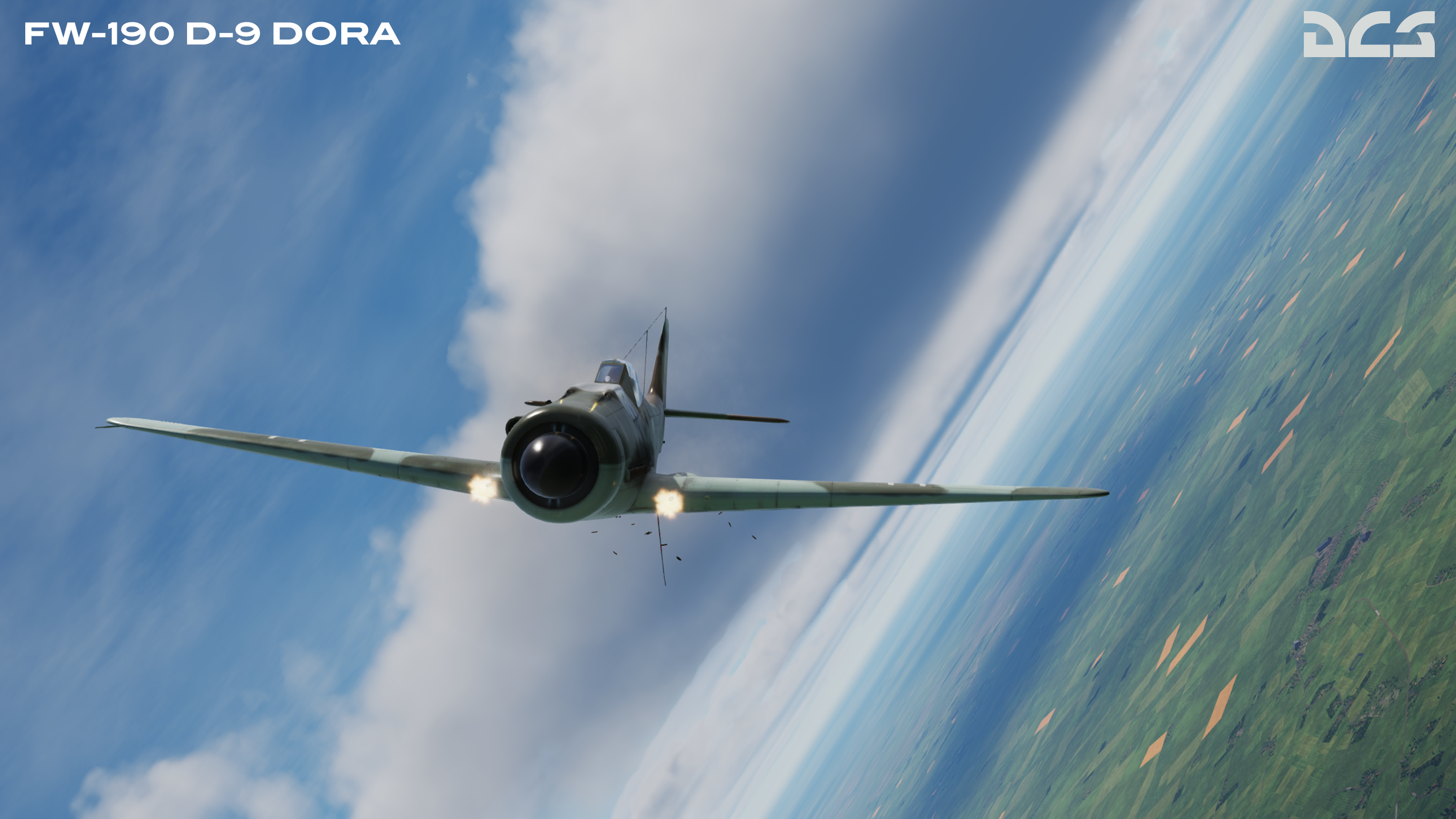
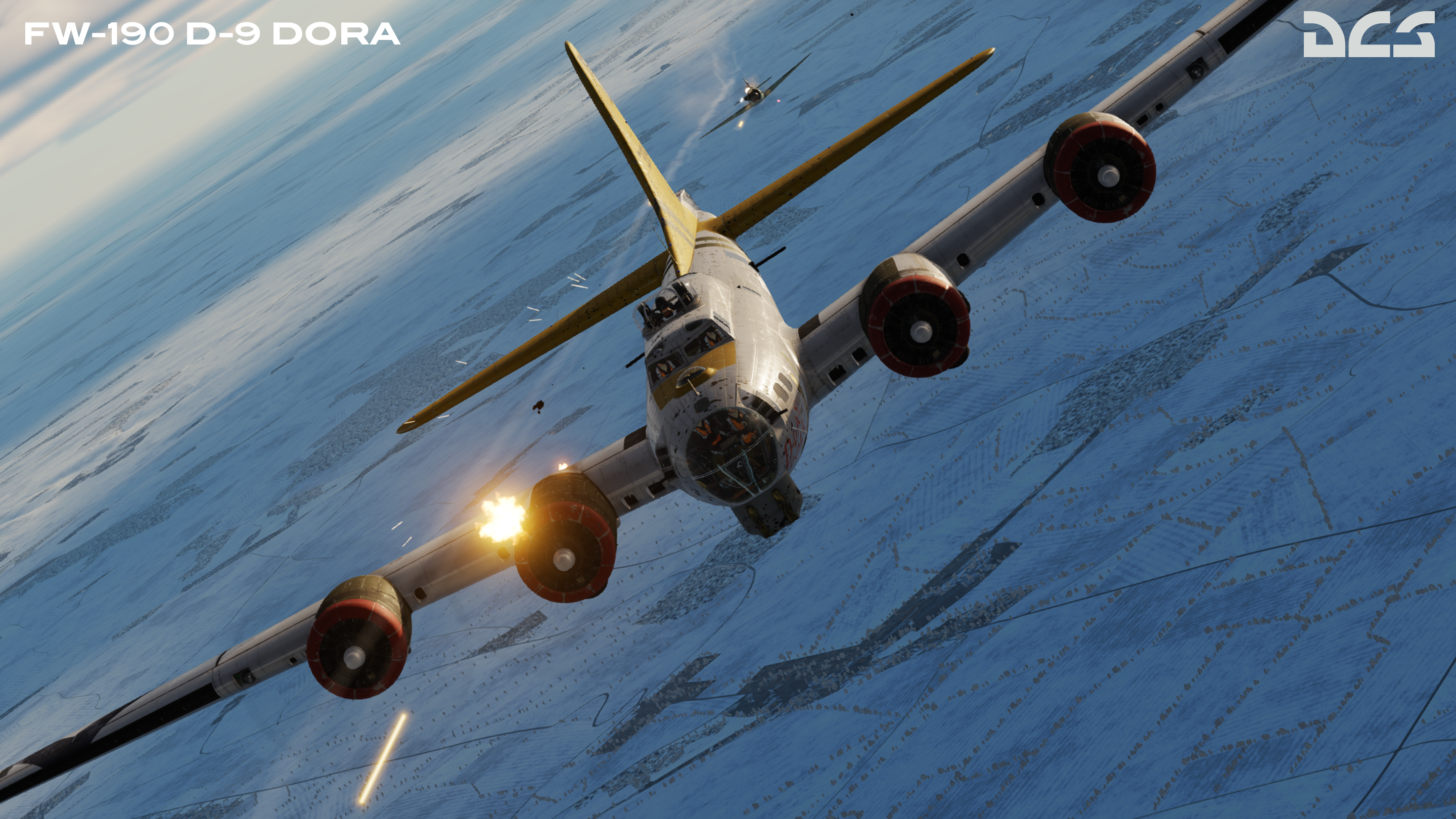
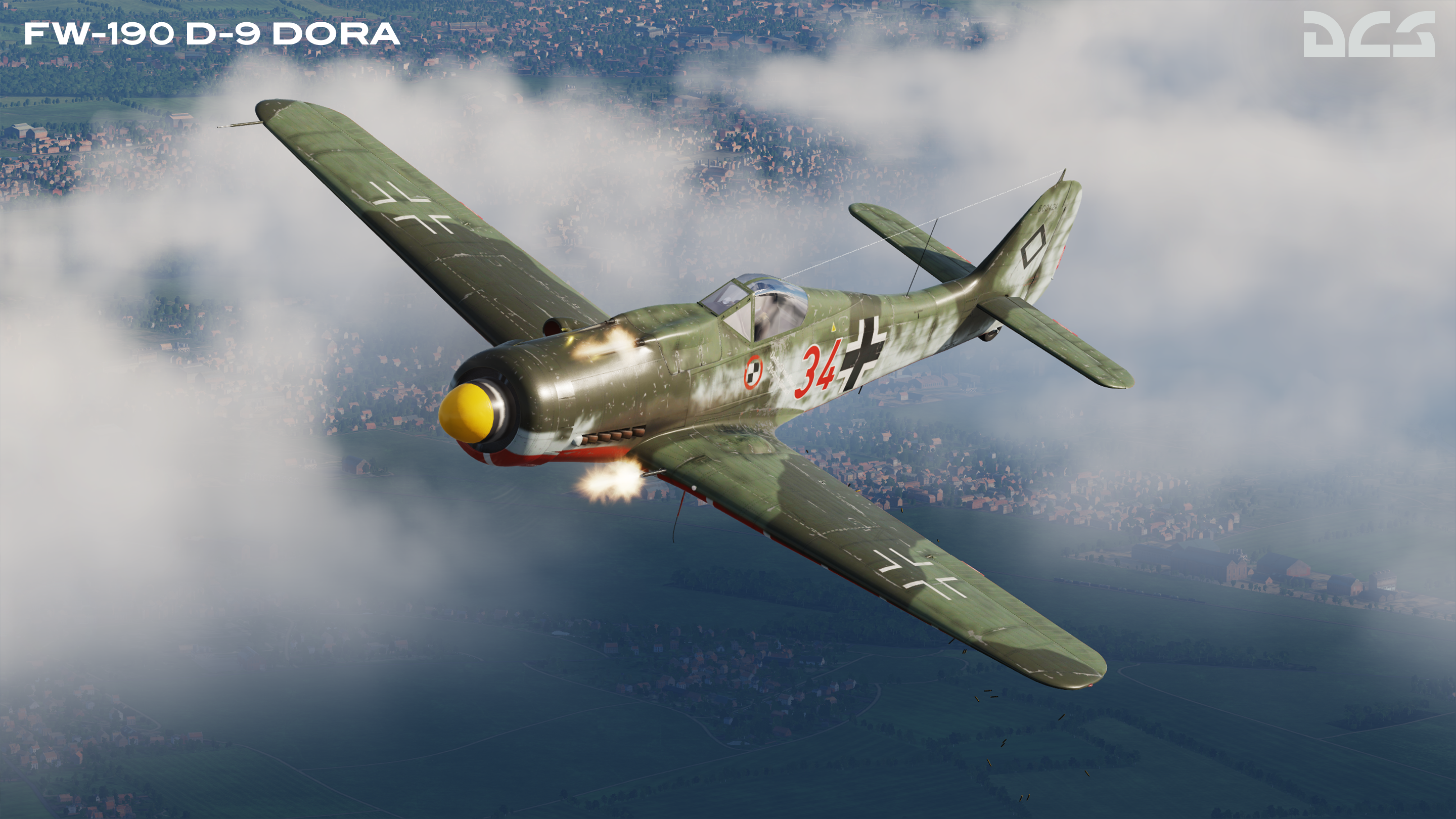
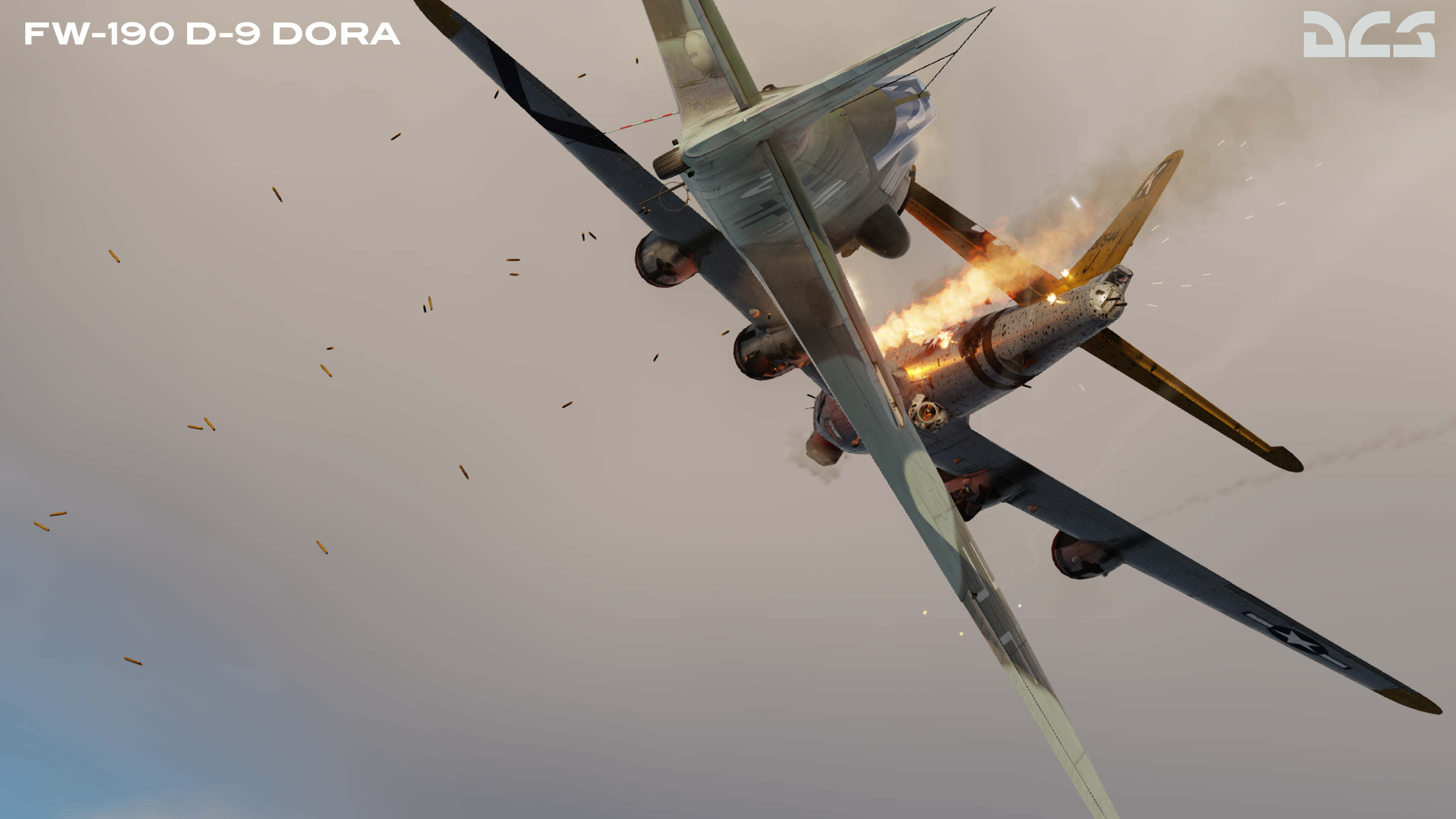
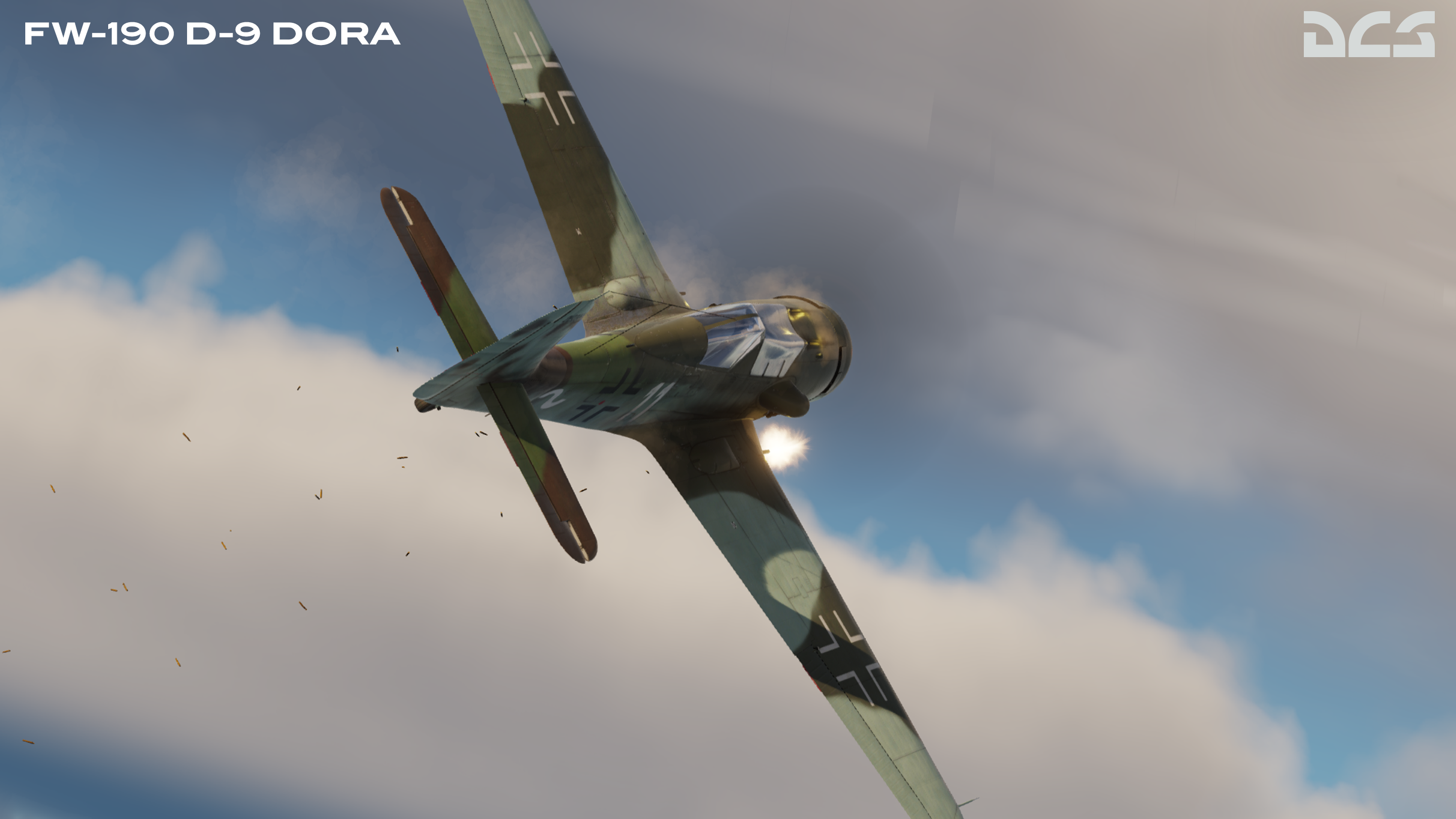
El Focke-Wulf Fw 190 está ampliamente considerado como el mejor avión de combate alemán de la Segunda Guerra Mundial. Su aparición en los cielos de Francia en agosto de 1941 fue un duro golpe para los Aliados, ya que era claramente superior a cualquier otro avión. Durante casi un año, el Fw 190 fue el campeón sin rival de la guerra aérea en Europa. El Fw 190 tenía la velocidad y el rendimiento a gran altitud como sus dos grandes ventajas.
El desarrollo de cazas aliados avanzados dio lugar a la variante Fw 190 D-9, que entró en servicio por primera vez en septiembre de 1944. Esta variante tenía un morro más grande que albergaba un motor Junkers Jumo más potente que producía 2.100 CV con el sistema de sobrealimentación MW-50. El D-9 fue diseñado para el combate aéreo a gran altitud y es un digno adversario del P-51D Mustang.
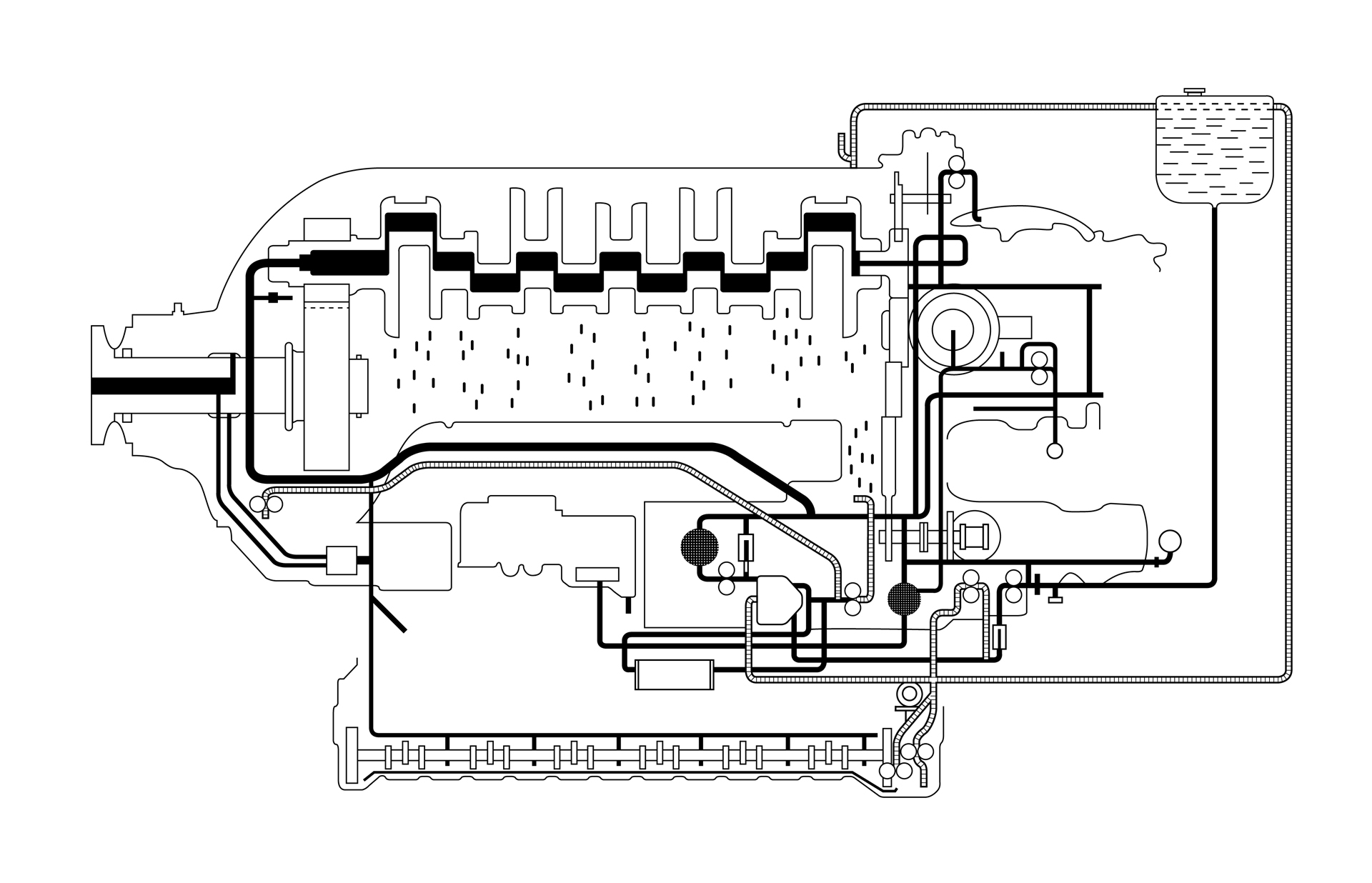
A 55-liyrt circular oil tank is located in the nose, protected by an armored ring. The oil cooler is also protected by the ring.
Two cockpit gauges are provided, both located on the Front Dash. The Oil Temperature gauge monitors the system with the normal operating temperature range of 110...130 degrees (min – 40, max – 135 degrees). The right-hand side of the Fuel and Oil Pressure gauge monitors the oil system with the normal operating pressure of 5 – 11 kg/cm2.
The D-series of the Fw 190 uses the AJA 180 annular radiator with the capacity of 115 liters. It is installed in front of the engine.
The Jumo 213 coolant system has both the main system, consisting of the coolant pump, engine, radiator, and the heat exchanger; as well as the secondary system with the secondary flow pump, coolant pump, and the coolant tank. The two systems only interact within the coolant pump.
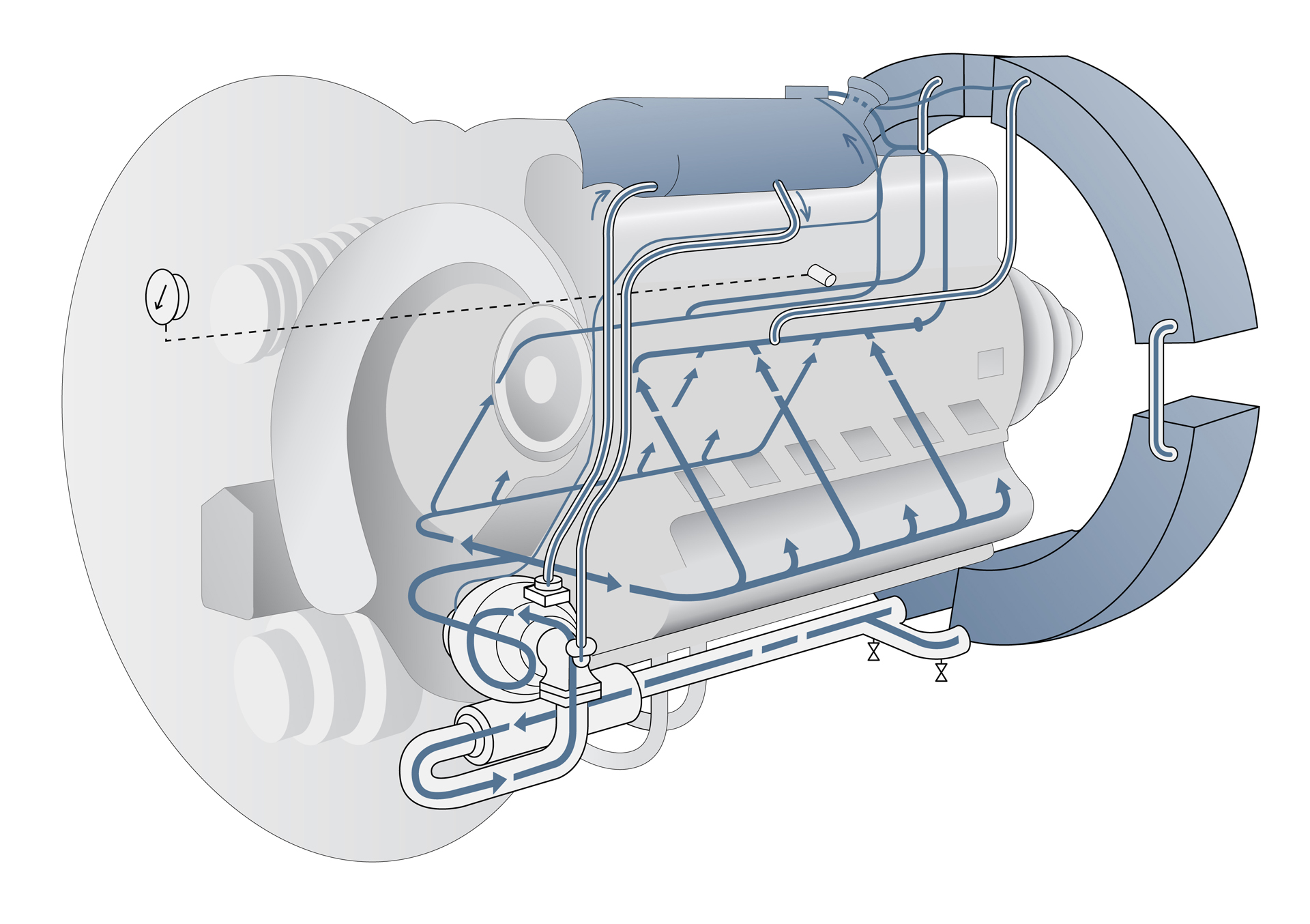
The coolant system attempts to operate at the temperatures about 100°C at all altitudes. A built-in electric temperature sensor between the engine and the radiator is used to control the temperature.
Proper pressure is required in the cooling system to prevent unwanted vapor formation. Any steam that may occur is separated in the Vapor Air Separator of the coolant pump and then sent to the secondary system coolant tank where it is condensed.
However, if the boiling limit in the coolant tank is exceeded the pressure begins to rise. Therefore, the pressure and temperature gauges should be watched at all times to avoid overheating and possible engine damage.
To avoid excessive pressure the cooling system has a pressure-controlled pressure regulating valve which also performs the task of maintaining pressure at greater altitudes via the evaporation of the coolant in the coolant tank.
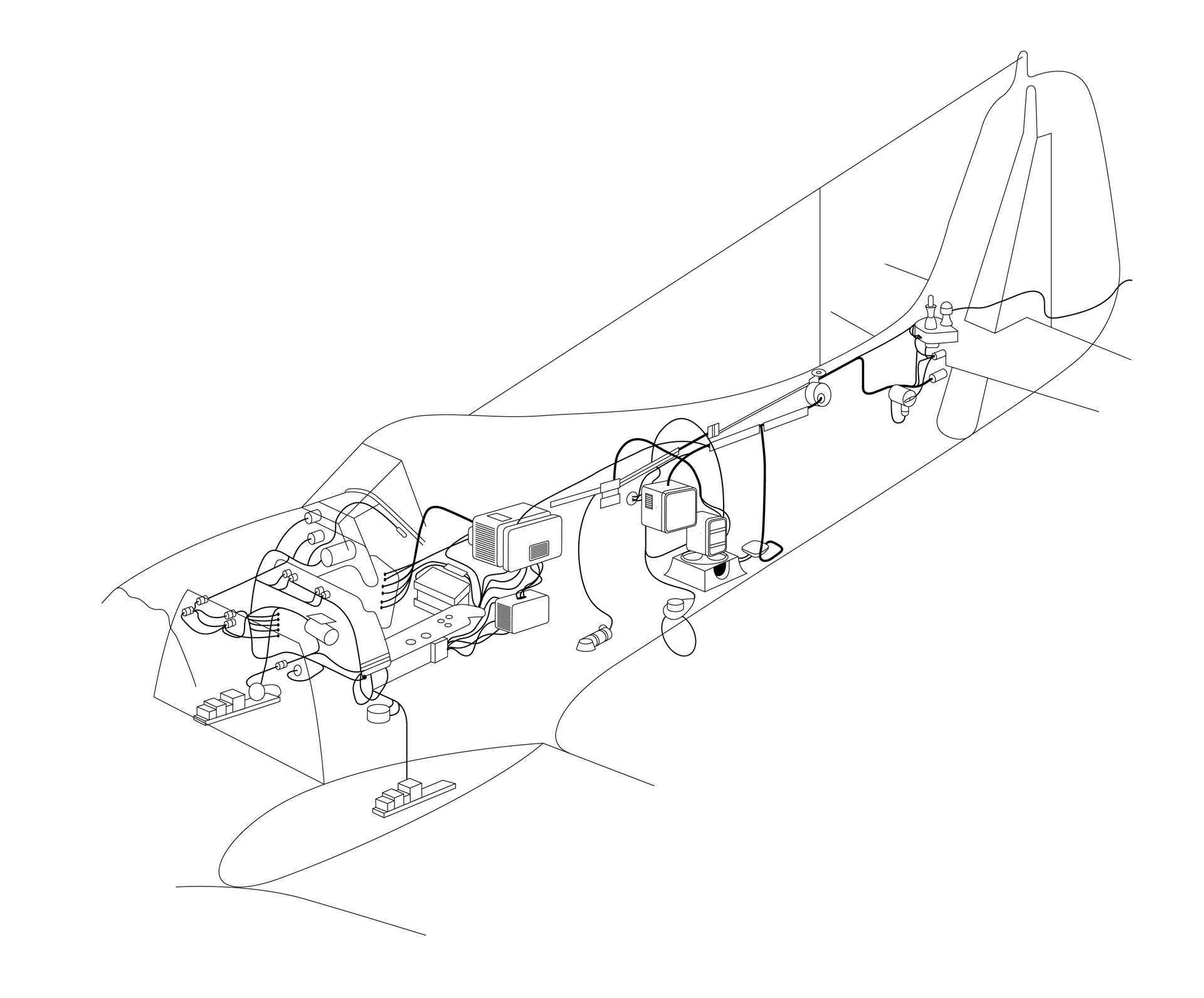
The aircraft if equipped with a FuG 16ZY radio, a specially-designed airborne VHF transceiver. The FuG 16 can be used for in-flight communication as well as for IFF identification and DF homing. The set operates in frequency range between 38.4 and 42.4 MHz.
The FuG 16ZY can also be set to "Leitjager" or Fighter Formation Leader mode that allows it to use a special "Y-Verfahren" (ground tracking and direction finding method) via the normal headphones.
The AFN2 component of the radio set allows easy navigation to ground-based homing beacons, showing both direction and range on one simple dial.
The Fw 190 D-9 carries powerful fixed armament that consists of twin synchronized 13mm Rheinemetall-Borsig MG 131 machine guns above the engine cowling with 475 rounds per gun, and twin synchronized Mauser MG 151/20 cannon in the wing roots with 250 rounds per gun.
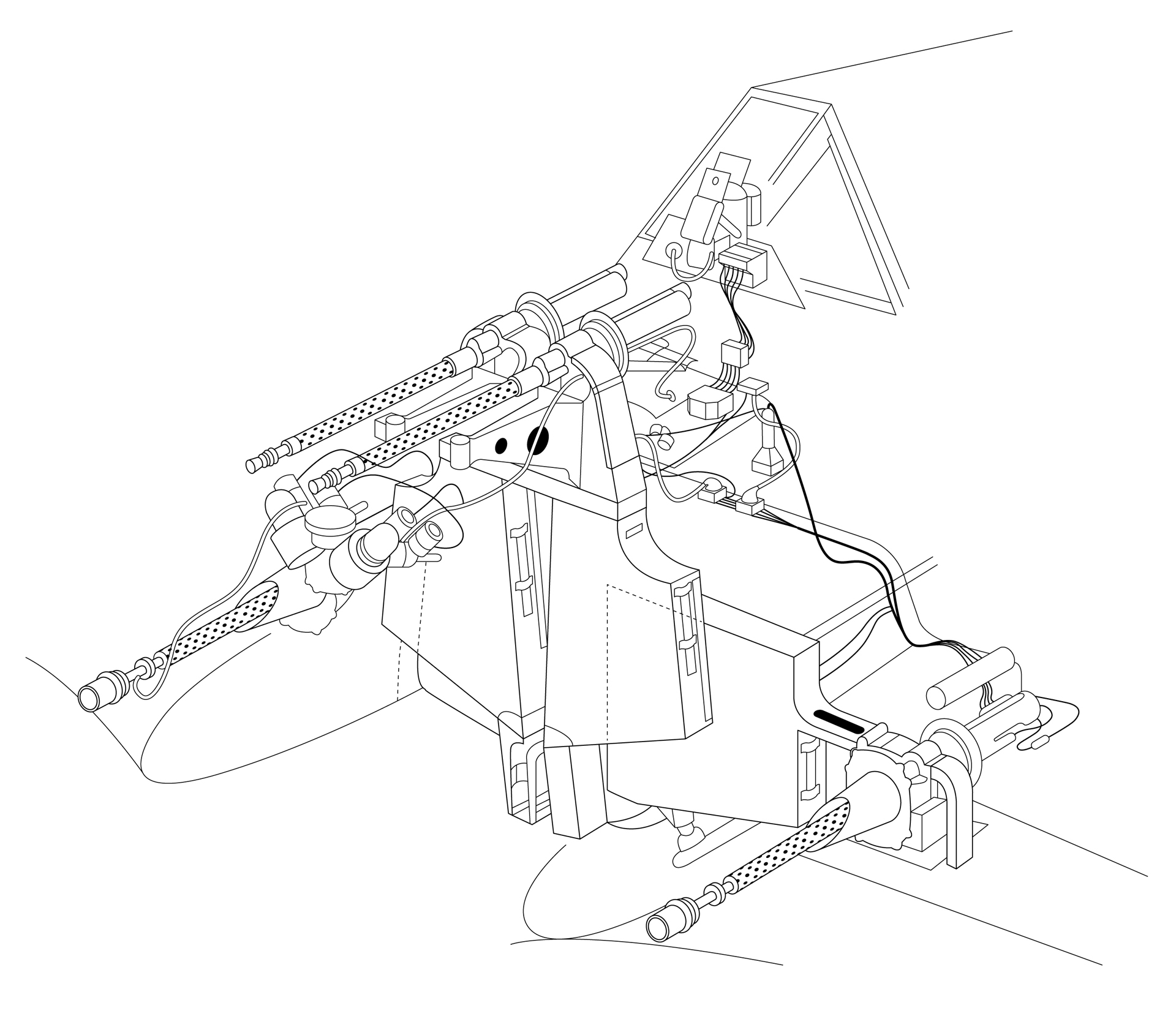
Cockpit equipment for the armament includes the EZ 42 gunsight as well as the SZKK 4 ammunition counter.
The SZKK 4 ammunition counter is from the SZKK (Schalt- Zahl- und Kontrollkasten) family of German indicators used on many Luftwaffe aircraft during WWII. While most pilots from other air forces had to estimate the amount of ammunition remaining in their weapons, German pilots had the luxury of seeing the actual amount of ammunition in their stores right in their cockpit.
The Fw 190 D-9 is also equipped with the pioneering EZ42 gunsight that is roughly equivalent to the well-known K-14 gunsight used on the North American P-51D Mustang.
The design history of the EZ gunsight began before the war, but the Reich Air Ministry continued to focus on conventional reflector sights, installing the ubiquitous REVI sight on most aircraft. "Einheitszielvorrichtung" (Target Predictor Unit) development remained low-priority until captured US aircraft showed that the Allies had predictor gunsights in operational use. Development took two long years, with first production EZ42 units delivered in spring of 1944.
A total of 803 EZ42 was produced in total, production ceasing in March of 1945.