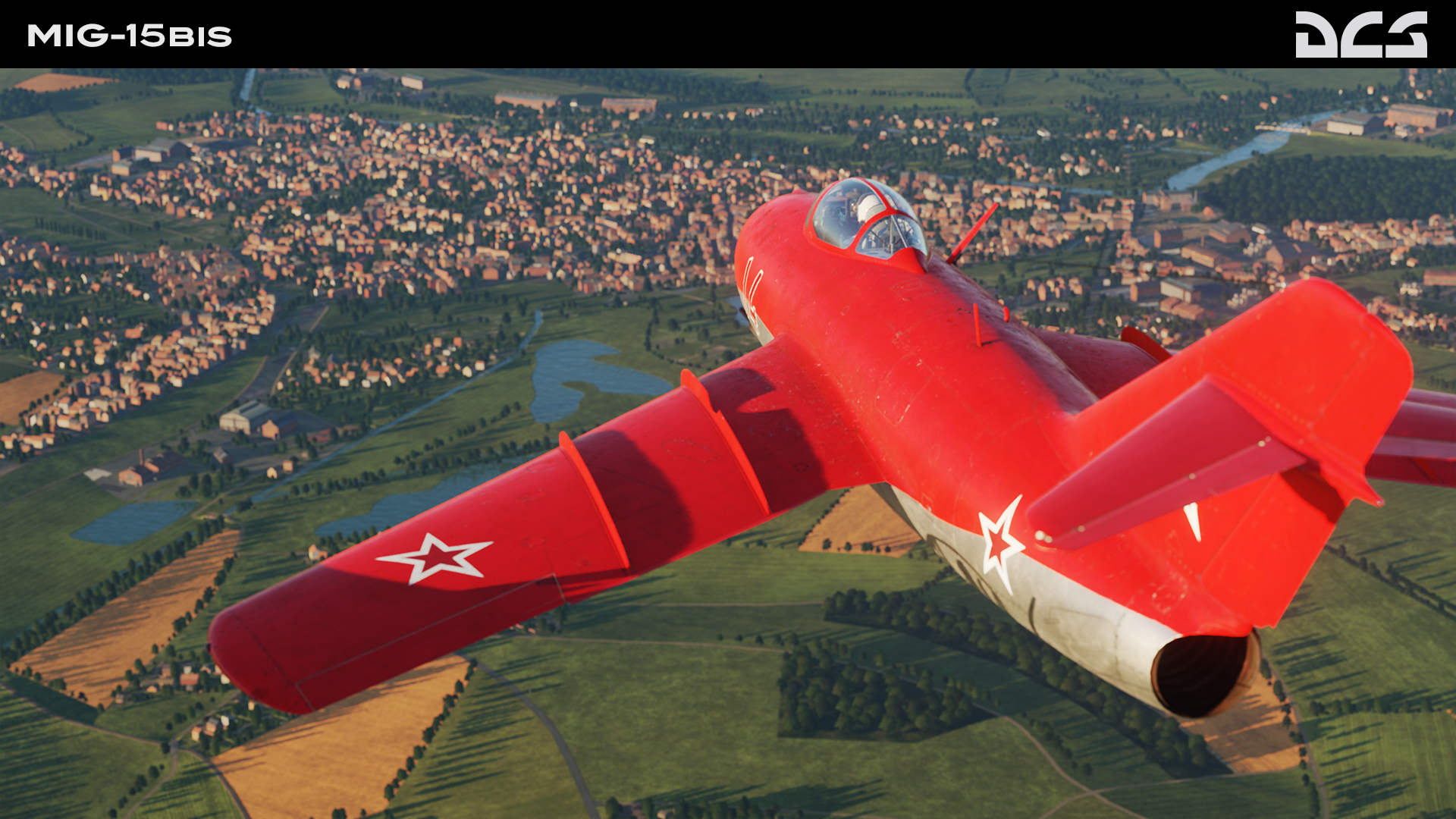
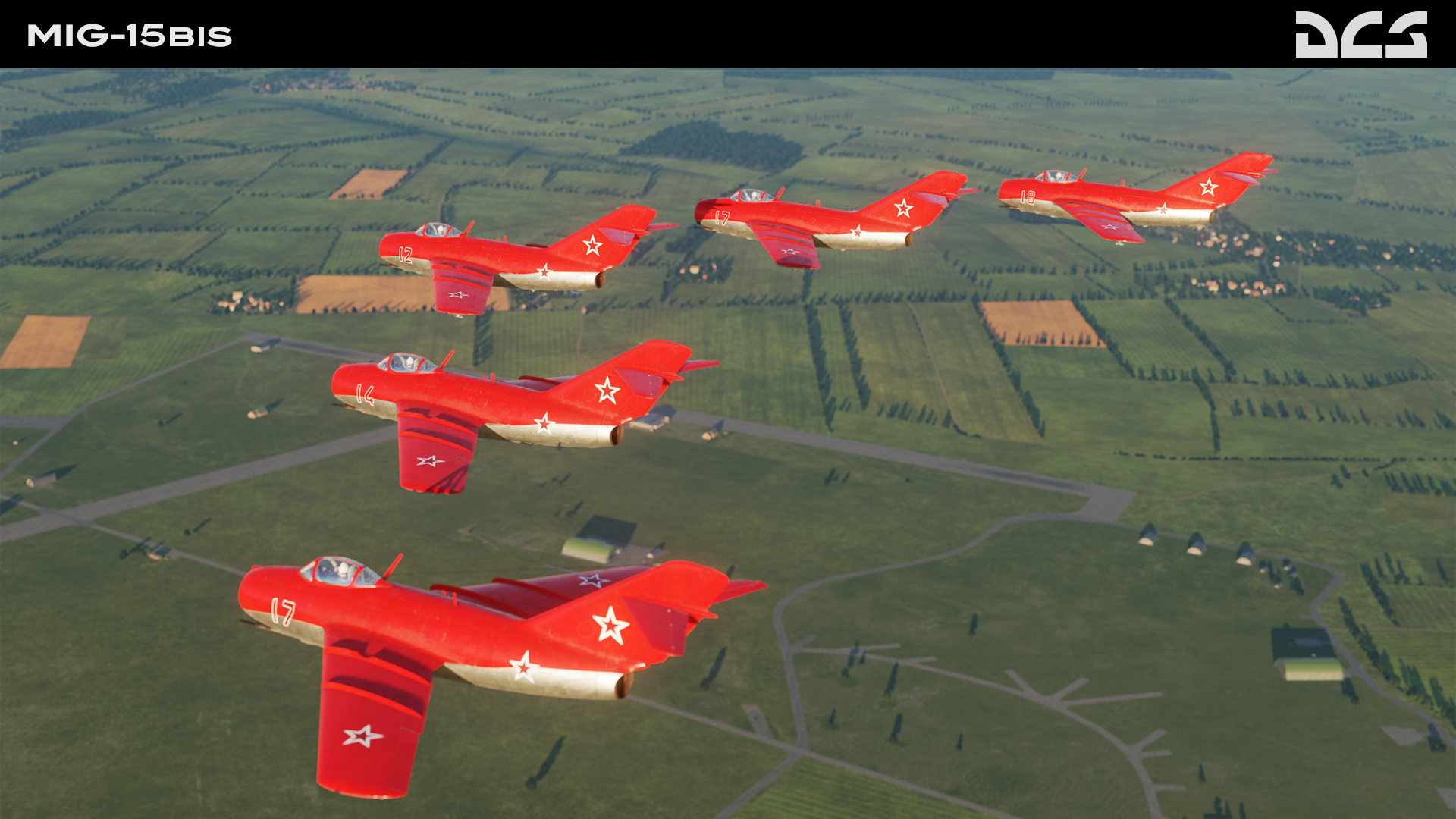
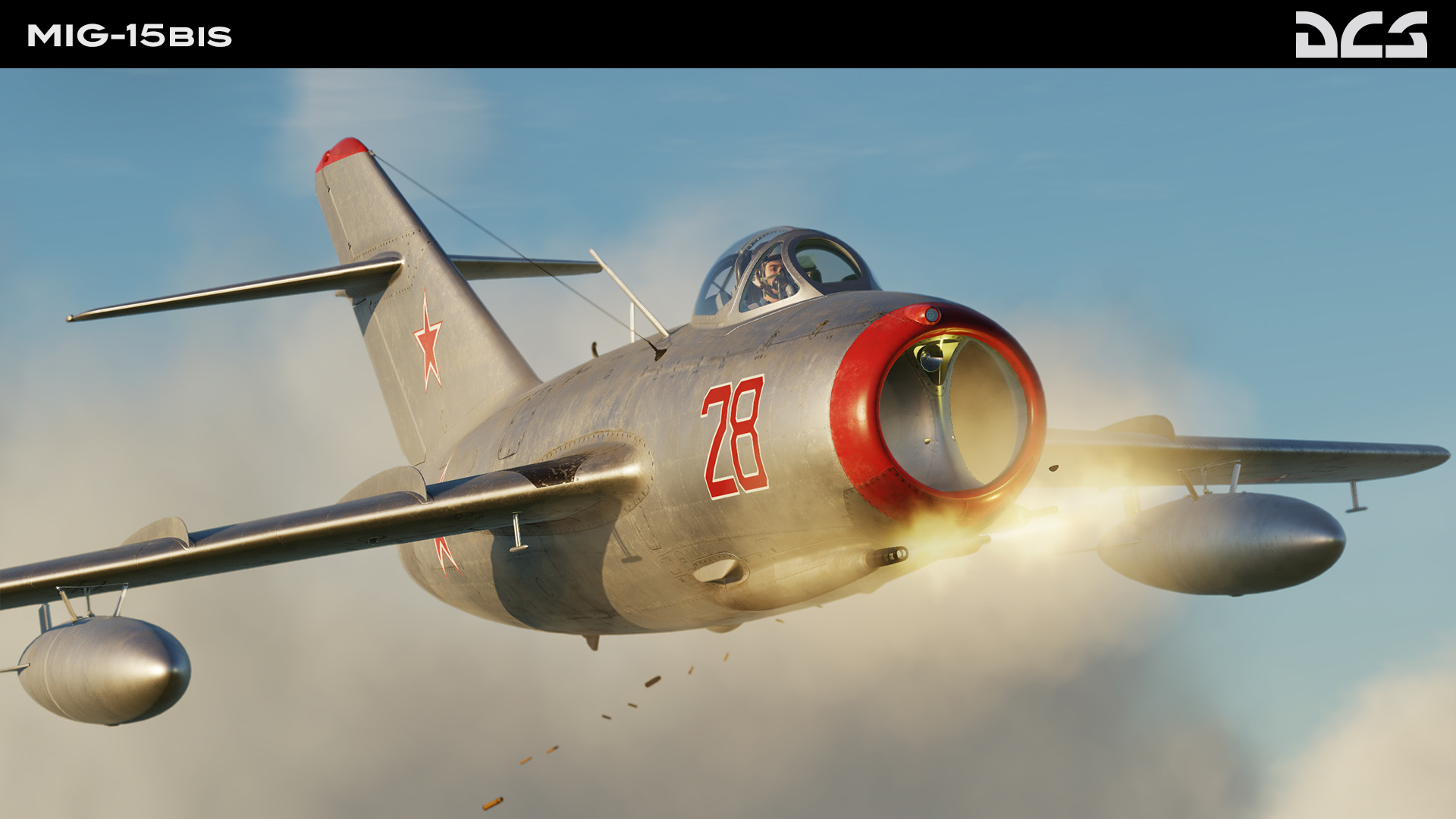
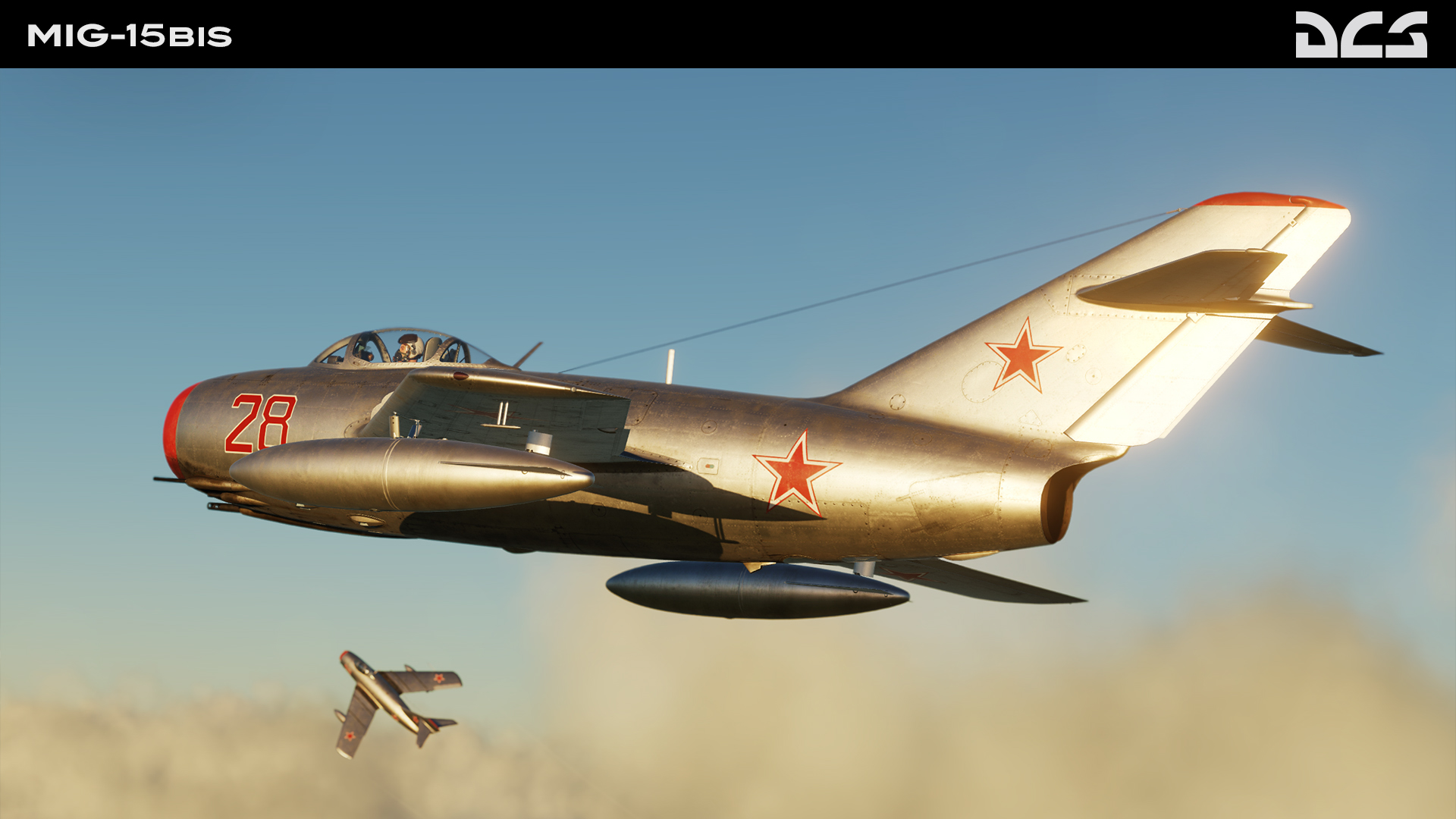
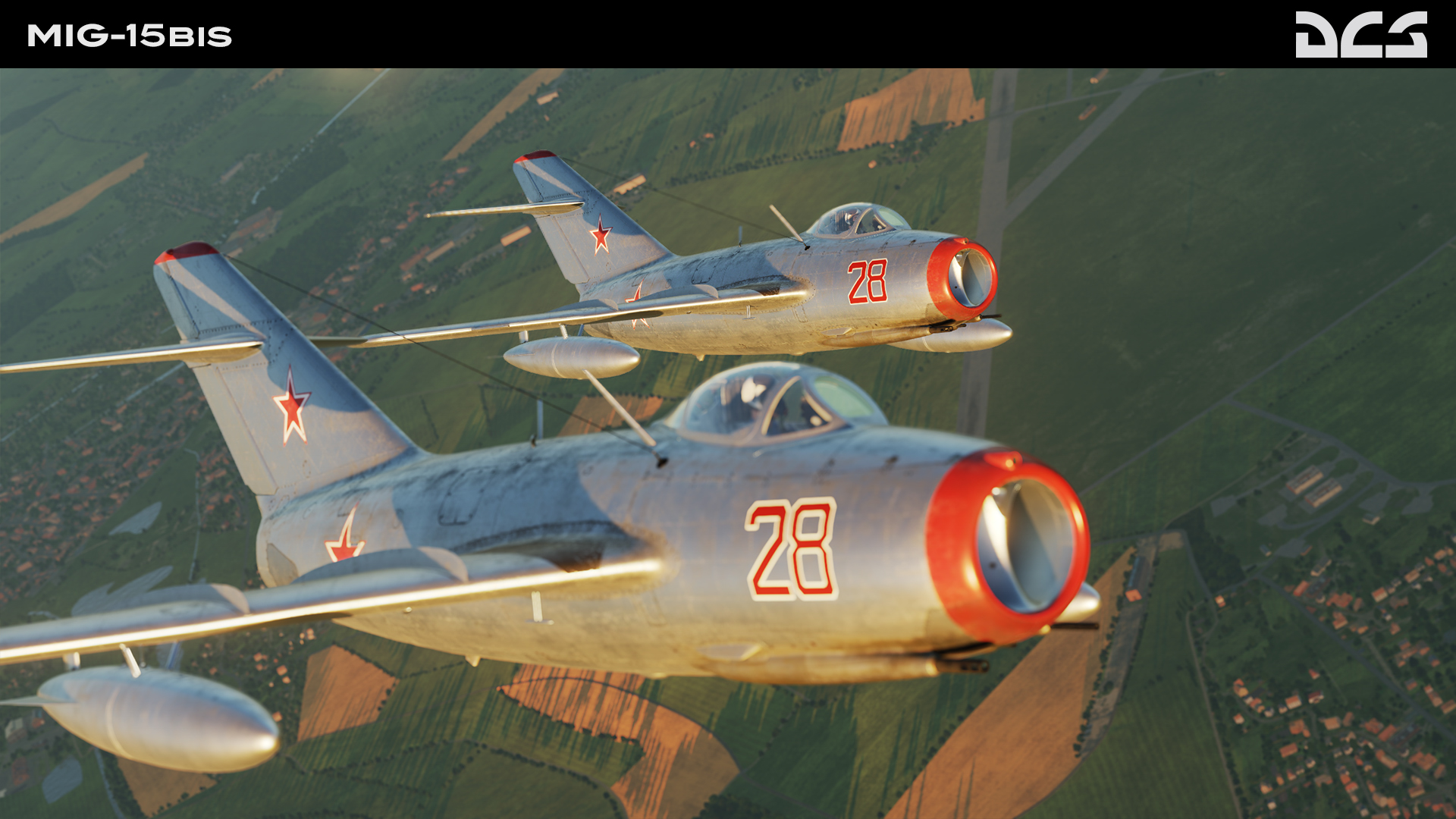
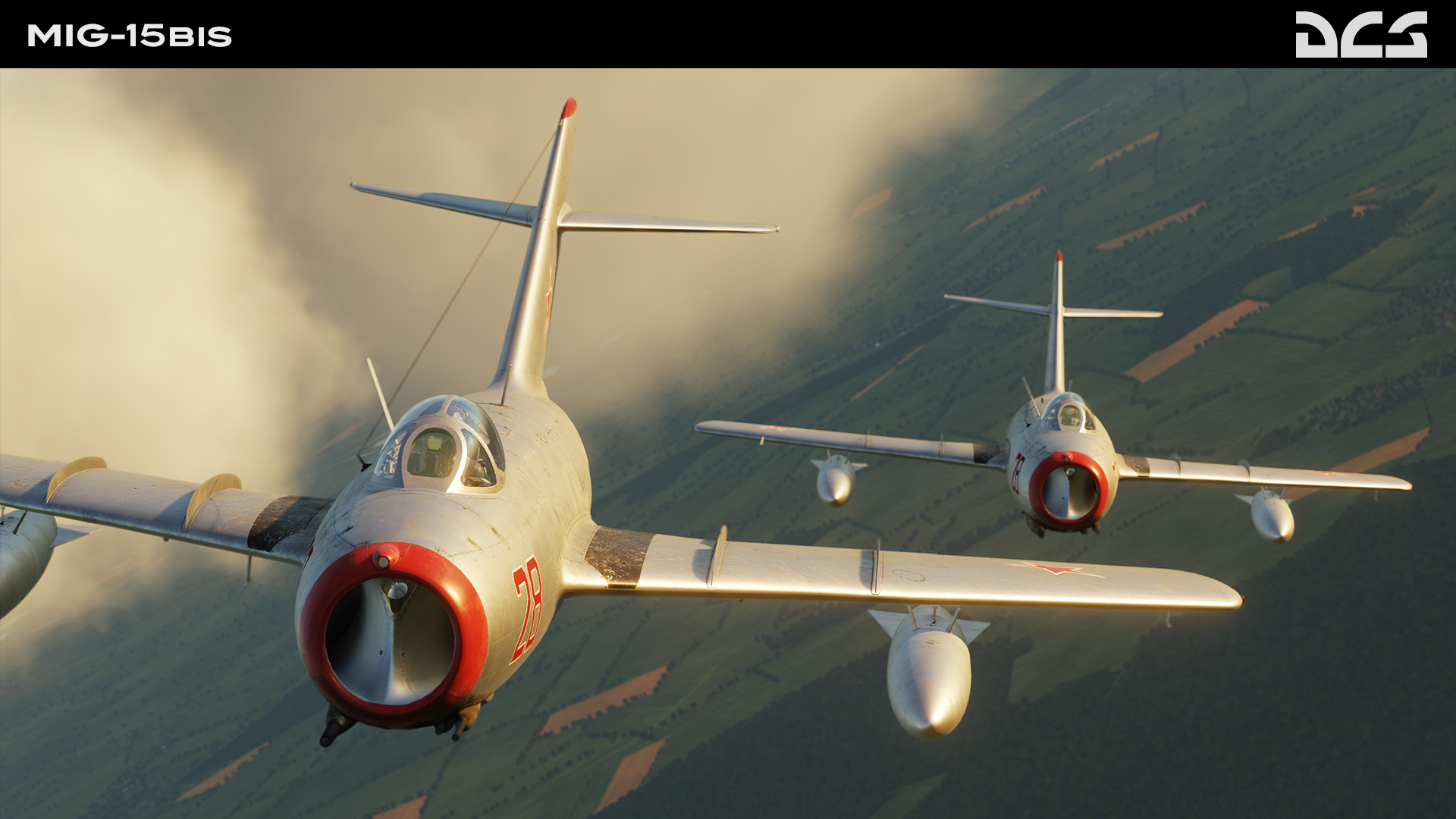
Desarrollado en los años inmediatamente posteriores a la Segunda Guerra Mundial, el MiG-15bis fue un caza de reacción de primera generación diseñado por la oficina de diseño Mikoyan-Gurevich de la Unión Soviética. El MiG-15bis es un caza monomotor con alas en flecha del que se fabricaron más de 15.000 ejemplares. El MiG-15 se hizo famoso en los cielos de Corea, donde luchó contra el F-86 Sabre y otros aviones aliados. Demostró ser un excelente rival para el Sabre, y a menudo era la habilidad del piloto la que determinaba quién llegaba a casa y quién se quedaba colgando de un paracaídas. Con una excelente relación empuje-peso y buenas características de ascenso, el MiG-15bis también estaba armado con dos cañones NR-23 de 23 mm y un único y potente cañón N-37 de 37 mm. No es de extrañar que muchos lo consideren uno de los cazas más mortíferos de la época.
The fire extinguishing system is designed to extinguish a fire in the fire hazard zone of the engine, i.e. the area where damage to the engine may lead to an open flame. This zone encompasses the area from the rear of the combustion chambers to the compressor turbine.
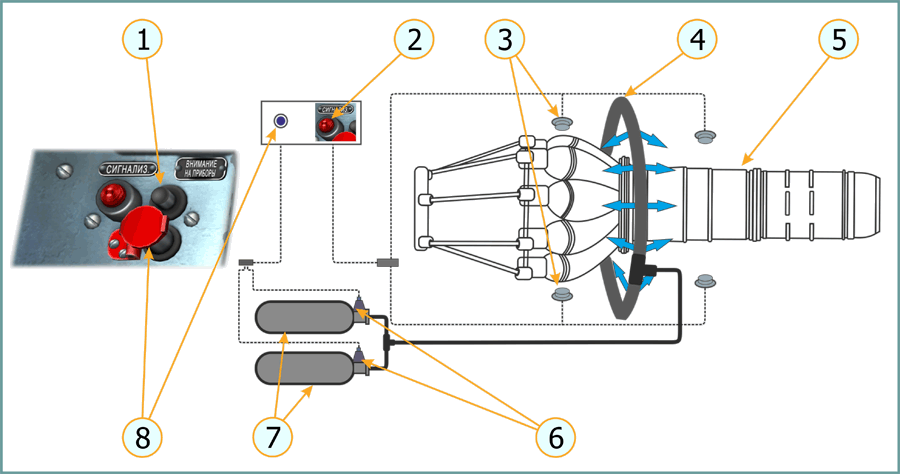
The fire extinguishing system includes:
In case of a fire and temperature reaching 120 – 140°C in the engine compartment, the fire detectors signal a warning and the FIRE warning light illuminates in the cockpit. To active the fire extinguishers, the pilot presses the activation button for fire the squibs of the extinguisher bottles. Firing the squibs perferates the bottle cap membrane and releases the gas through the extinguisher line into the manifold, where it is dispersed around the fire hazard zone of the engine to extinguish the fire.
The oxygen supply system is designed to provide the pilot with required oxygen supply in flight. The system consists of oxygen bottles (tanks), tubing lines, pressure gauges, KP-14 oxygen regulator, KP-15 parachute oxygen set.
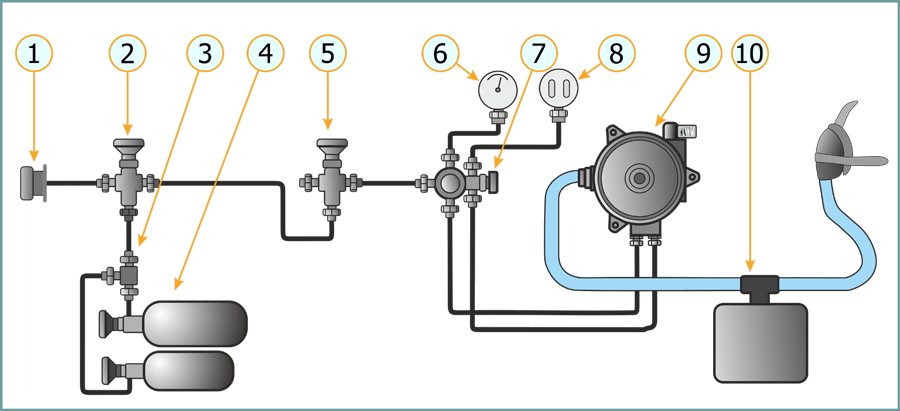
Oxygen supply system operation
Oxygen is maintained at a pressure of 150 kg/cm2 in the bottles (4). Under normal use, oxygen from the bottles flows to the charging valve (2) via a triple adapter, which connects the bottles with the onboard charging connector (1) for charging or with the onboard supply line for pilot use. From the charging valve, oxygen flows to the onboard supply valve (5). The supply line then leads to the KR-14 pressure relief valve (7), from which one of the lines leads to the pressure gauge (6), located on the left side of the instrument panel, while the other one leads to the KP-14 oxygen regulator (9).
The KP-14 regulator supplies the proper mixture of oxygen and air at all times, automatically supplying positive pressure-breathing at high altitudes. As altitude increases, the percentage of oxygen in the mixture increases as well.
A hose and oxygen mask are attached to the regulator. The regulator is connected to the IK-14 oxygen flow indicator (8). The KR-14 pressure relief valve decreases oxygen pressure to 2-3 kg/cm2 as it directs oxygen to the regulator. In the regulator, pure oxygen is mixed with surrounding cockpit air. The pilot breathes surrounding pressurized cockpit air up to a cockpit (pressurized) altitude of 2000 m, i.e. the pilot is not supplied with oxygen from the tanks by the oxygen supply system. At altitudes between 2000 and 8000 m, the percentage of oxygen in the regulator mixture begins to increase. At cockpit altitudes over 8000 m, the pilot is supplied with 100% oxygen.
Operation of the KP-14 oxygen regulator requires opening the diluter valve:
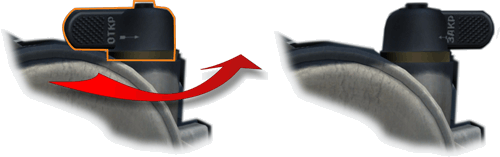
The simulation assumes the pilot is always wearing the oxygen mask. Failure to open the diluter valve means the pilot will be starved of oxygen and may begin to lose consciousness in 30 - 40 seconds.
In case of a fire or smoke in the cockpit at high altitudes, use of emergency oxygen is recommended. To enable emergency oxygen flow, turn the emergency oxygen supply valve on the KR-14 pressure relief valve fully left (counterclockwise).
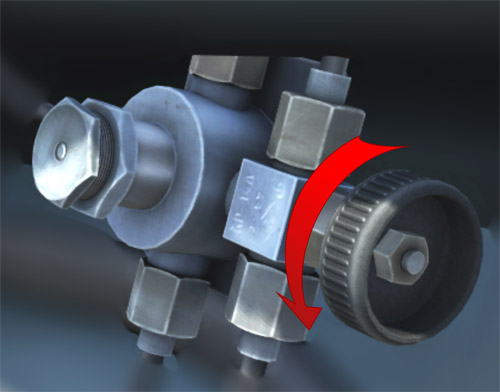
In case of cockpit depressurization at altitudes of up to 12000 m, the oxygen supply system provides a sufficient supply of oxygen to allow for a descent to safe altitudes. Depressurization at altitudes above 12000 m is fatal.