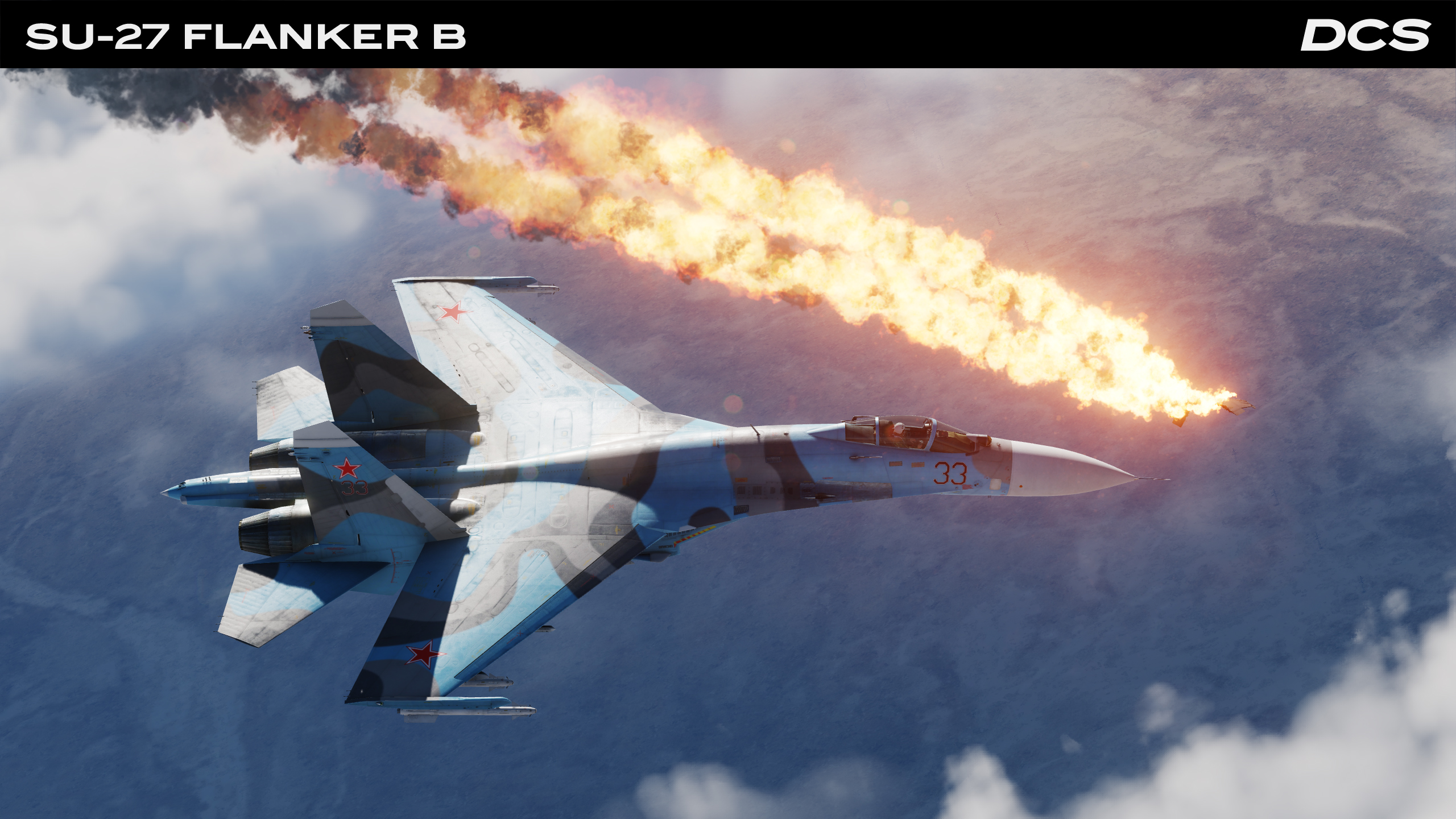
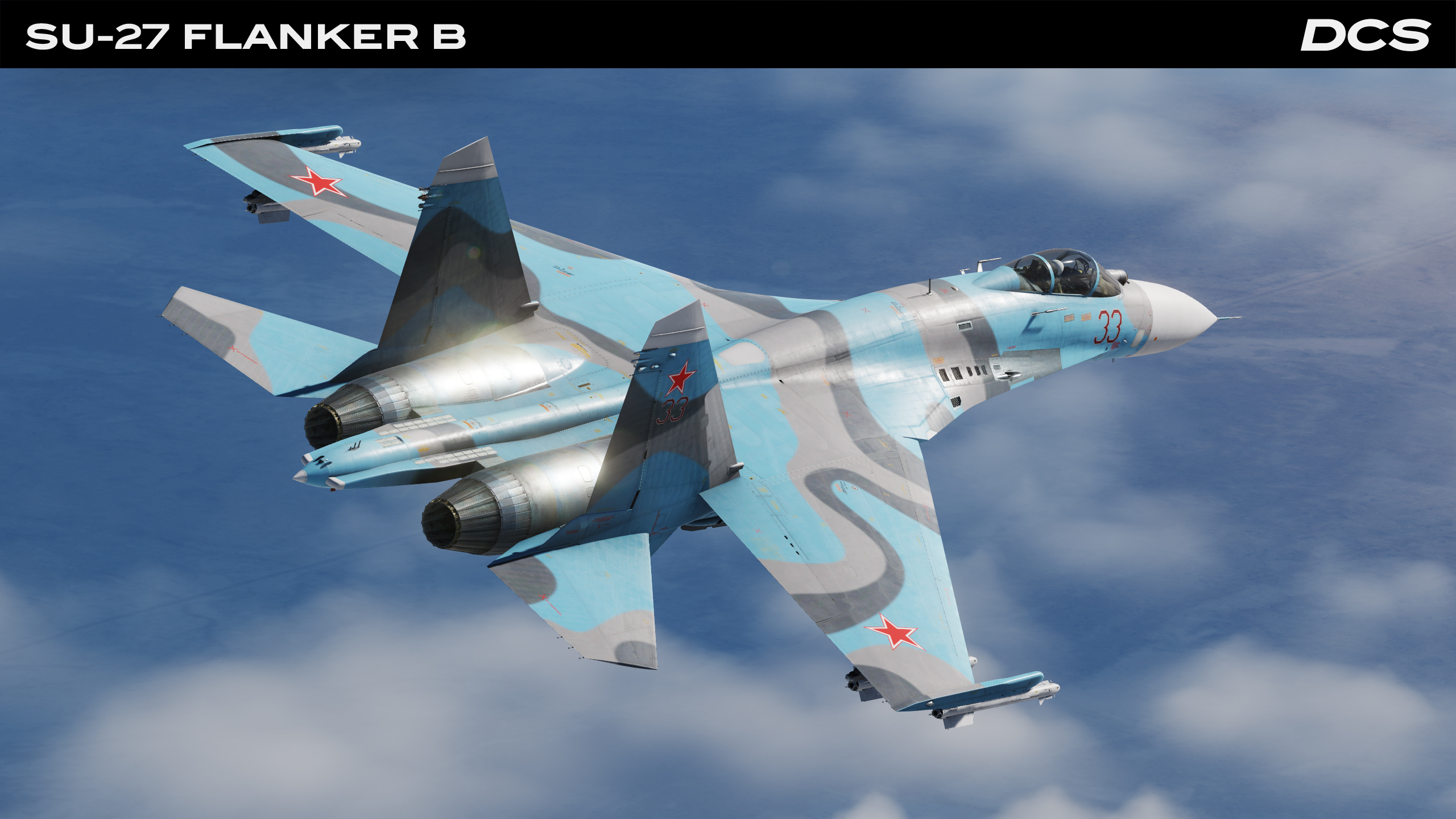
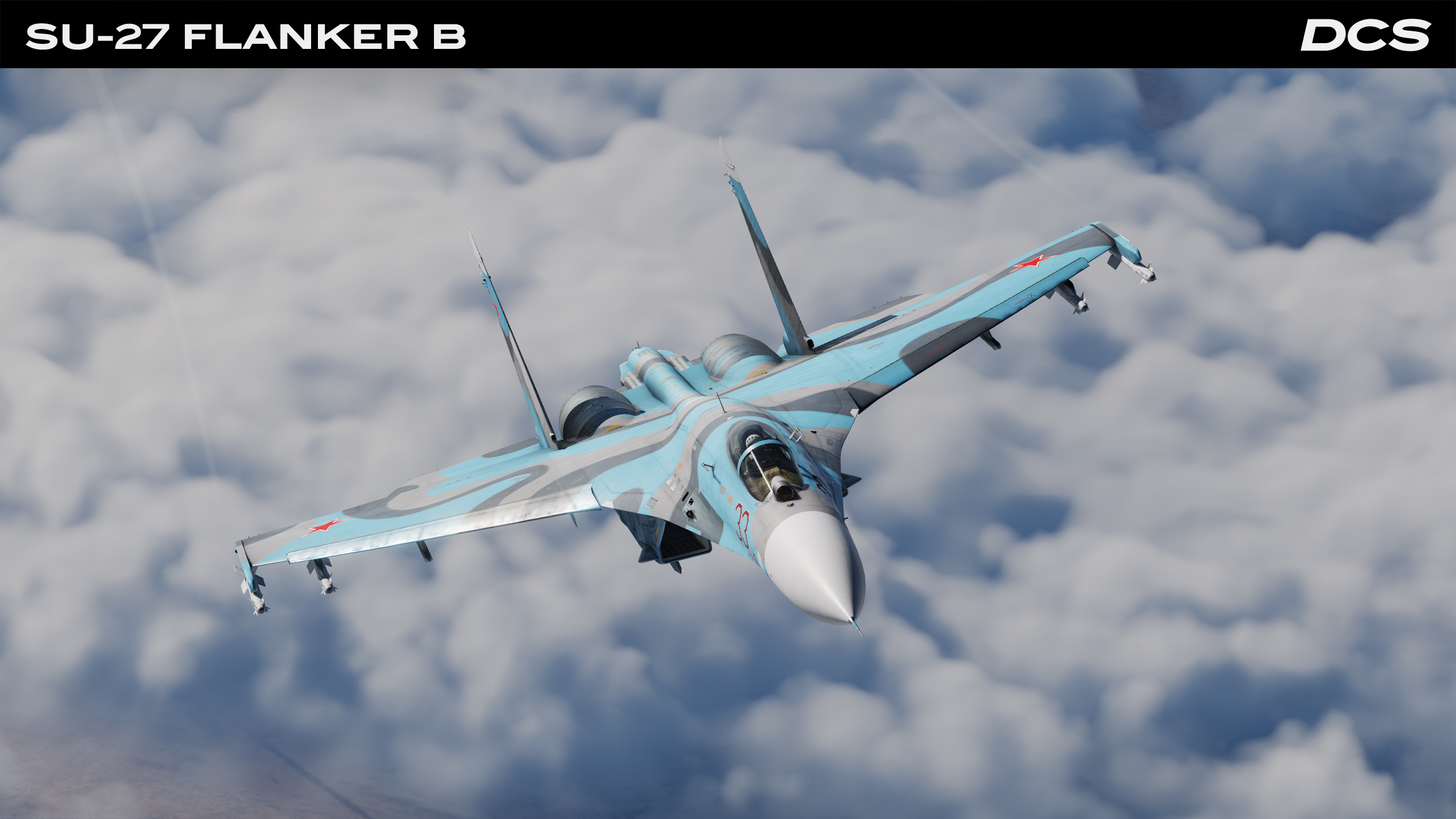
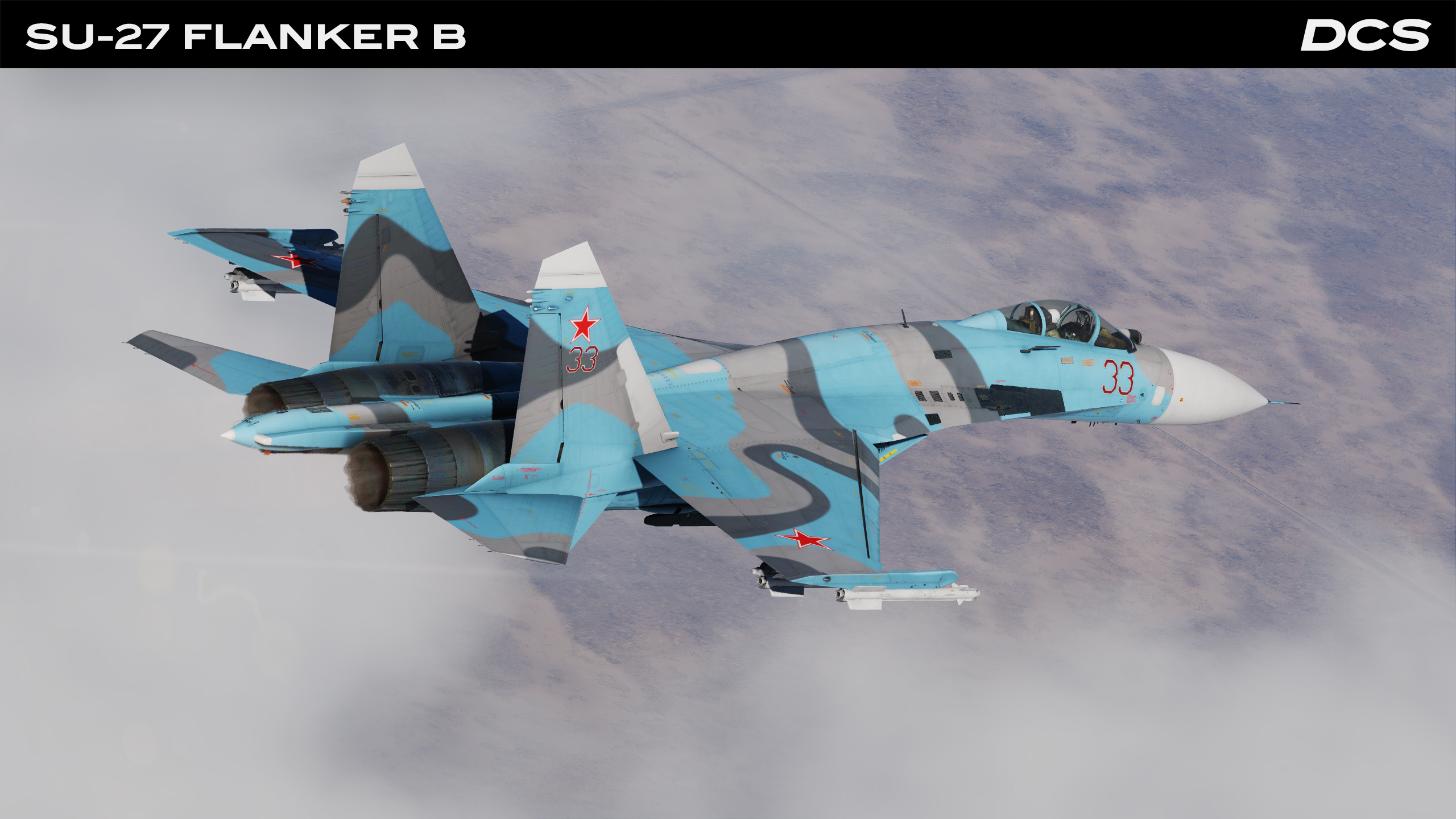
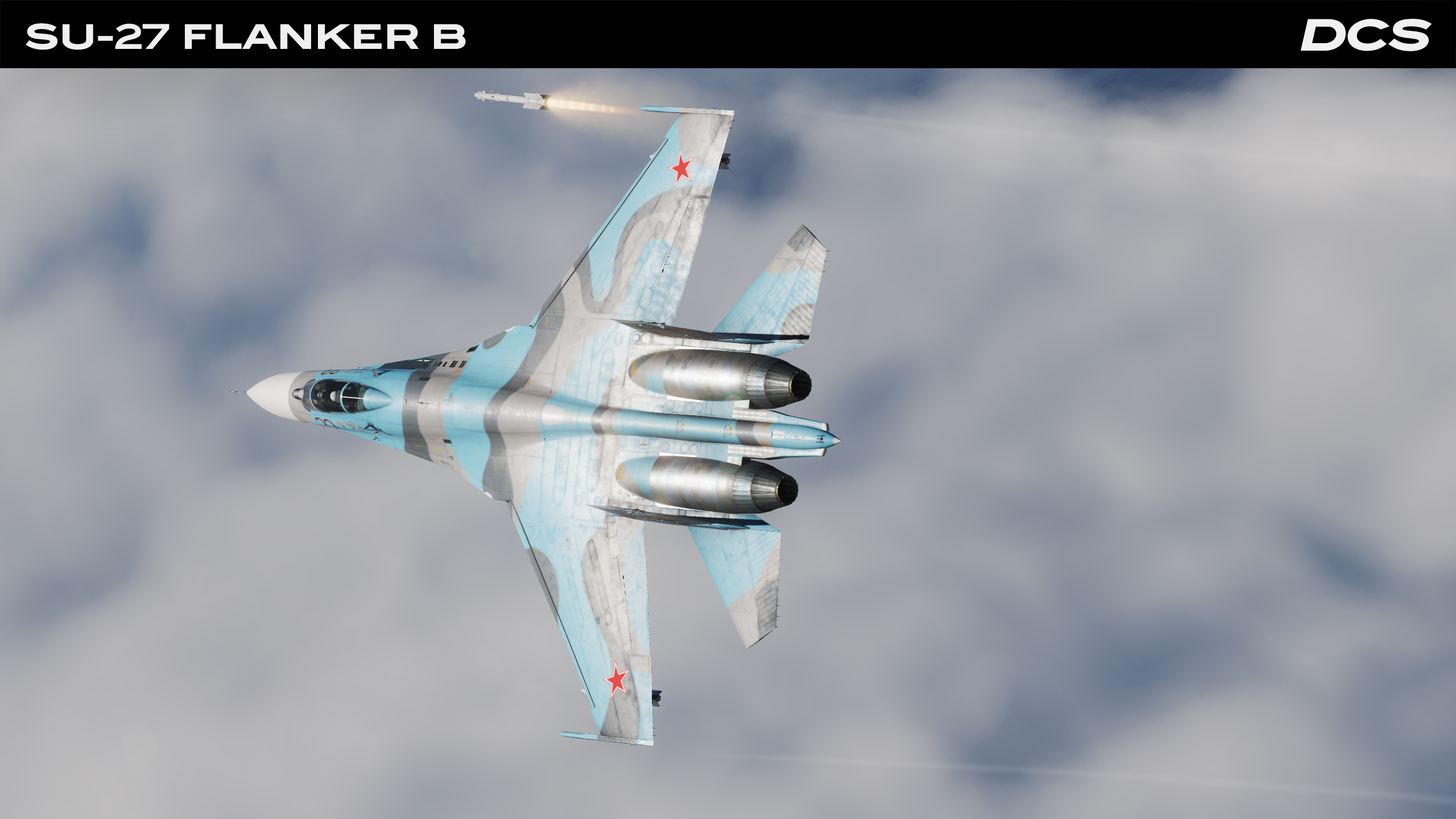
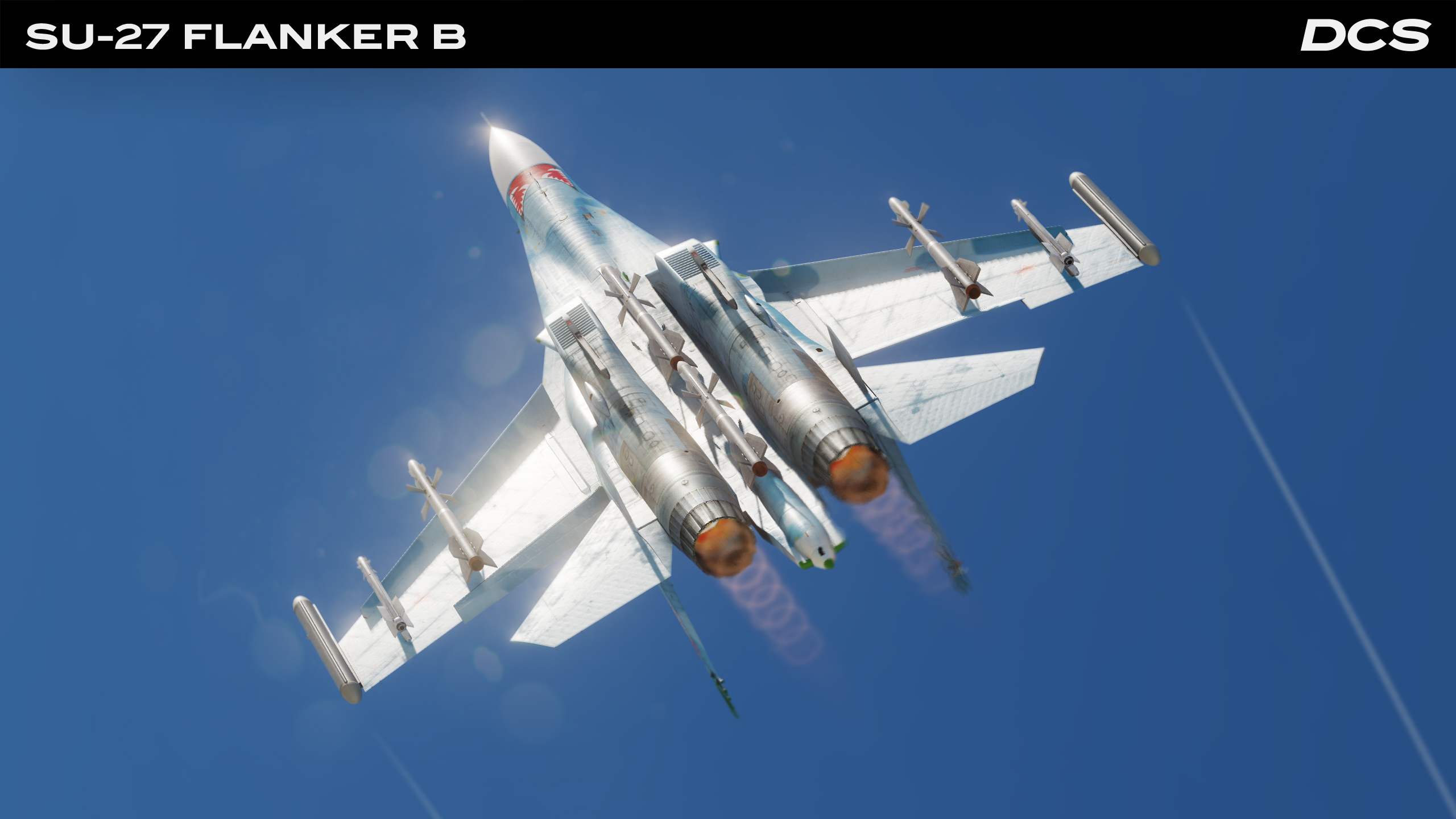
Su-27,北约代号"侧卫",是俄罗斯现代军事航空的支柱之一。设计的原因是用于以对抗美国的F-15战斗机。"侧卫"是一款超音速、高机动性的空优双发战斗机。"侧卫"既能能够侦察到的远远超出可视范围的目标,也能基于它惊人的低速性和大迎角机动性在格斗中拥有巨大优势。利用其雷达和隐秘的红外搜索跟踪系统,"侧卫"可以使用很多雷达和红外制导的导弹。"侧卫"还带有一个头盔瞄准,让你能通过看向目标并锁定它!除了其强大的空对空的能力,"侧卫"也可以配备炸弹和非制导火箭弹进行对地攻击。
作为怒火危崖系列,DCS怒火危崖: Su-27侧重于易操作性,而无需复杂的驾驶舱互动。这样可以显著降低学习难度。因此,DCS怒火危崖: Su-27提供基于键盘和操纵杆的专注于任务的驾驶舱系统的相关指令。
Su-27 can carry a solid list of non guided bombs and rockets.
High explosive general purpose bombs FAB-100, FAB-250, FAB-500.
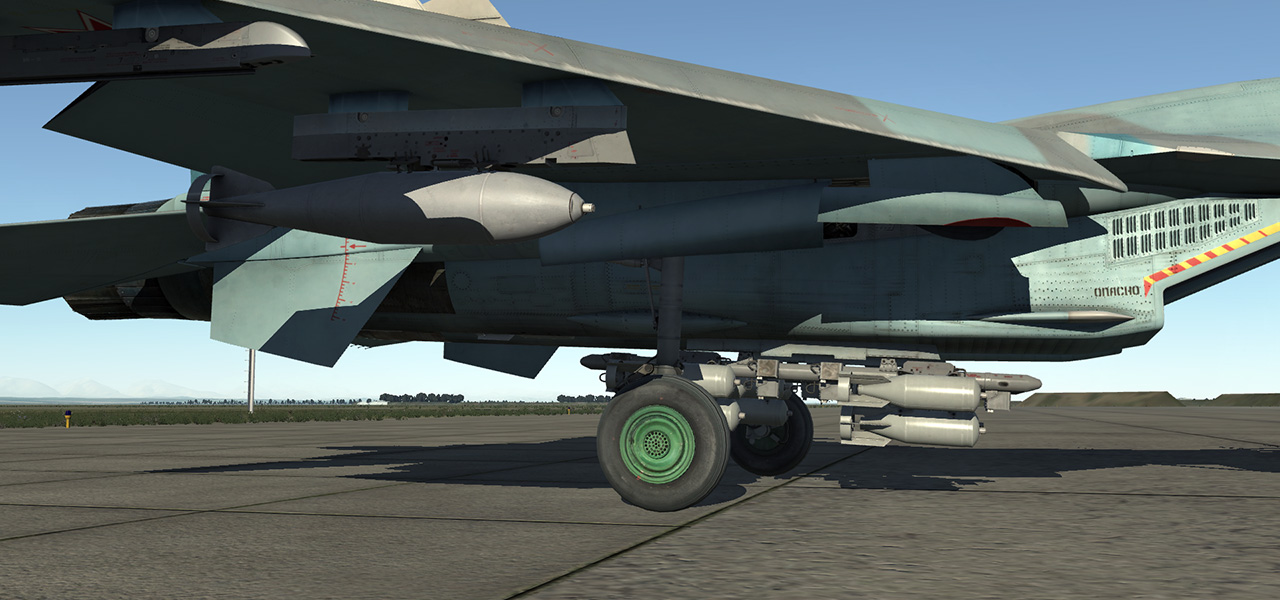
Concrete piercing bombs BetAB-500.
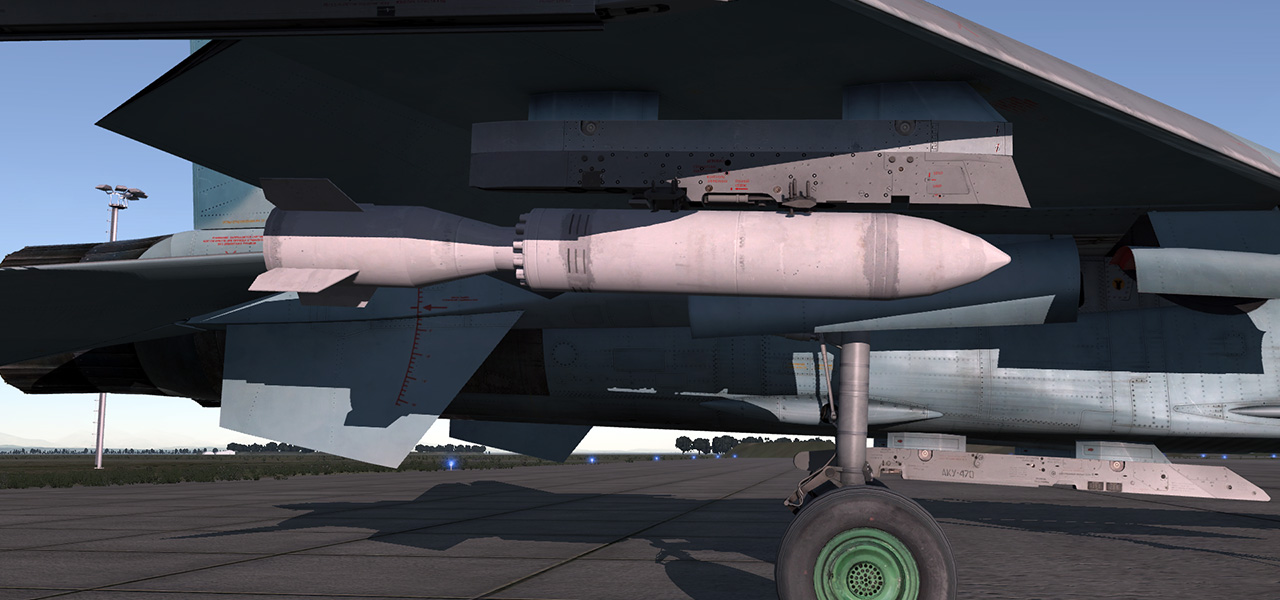
Cluster munitions RBK-250, RBK-500, KMGU.

Rockets S-8, S-13, S-25.
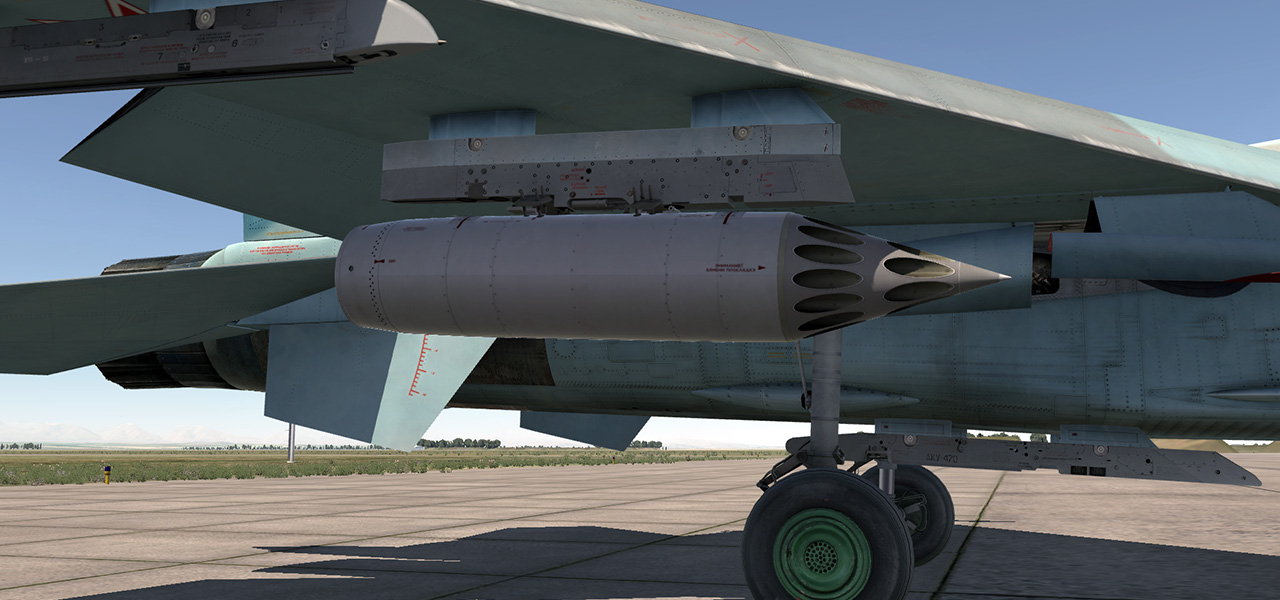
Illumination bomb SAB-100.
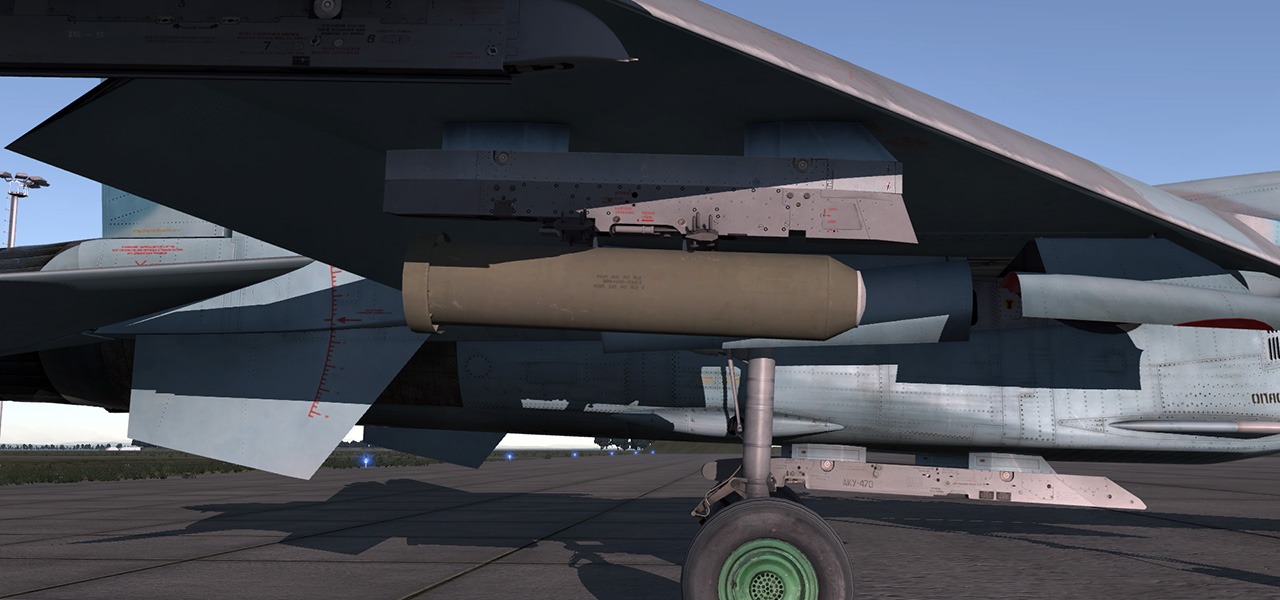
The Su-27 is controlled by a combination of mechanical and fly-by-wire sub-systems. The longitudinal control is maintained by the synchronous deflection of stabilizers and lateral control is maintained by the differential deflection of flaperons, stabilizers, and rudders. Directional control is maintained by the deflection of rudders.
The mechanical control system is intended for differential deflection of flaperons as part of the lateral control system; synchronous deflection of flaperons during takeoff and landing; rudder deflection during pedal movement; and artificial flight control loading and trimming.
The fly-by-wire system is intended for manual control of the aircraft via longitudinal and lateral channels to provide desired stability and control qualities; to limit angle-of-attack and g load; to control wing leading edges; and for synchronous control of flaperons during maneuvering.
In order to improve maneuvering performance, the Su-27 has a low degree of pitch stability, which resulted in the necessity of using the fly-by-wire system for augmenting control stability of the aircraft.
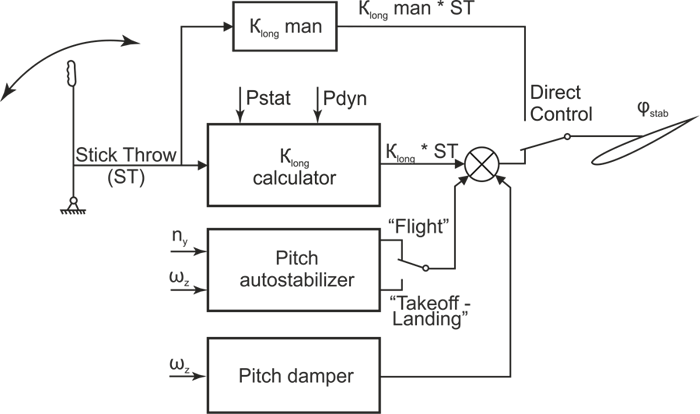
Longitudinal channel stabilizer control schematic block diagram
The longitudinal channel of the fly-by-wire system has three operational modes:
The TAKEOFF-LANDING and FLIGHT modes of the fly-by-wire system are switched automatically in accordance with landing gear position.
The DIRECT CONTROL mode is switched on if the fly-by-wire system fails. Piloting in this mode requires special care; the flight is characterized by:
When in this mode, compensate for the aircraft’s tendency to change pitch by using short, preemptive stick inputs. Refrain from abrupt, large stick inputs. Angle of attack in this mode should not exceed 10 degrees (the flight envelope limiter does not restrict the angle in this mode); perform turns with a bank no more than 45 degrees.
It is in this mode that the "Pougachev’s Cobra" aerobatic maneuver is performed.
The fly-by-wire system is a trajectory control system. In other words, if the control stick remains in the same position, the system will hold the set flight path. This is why the reduction of airspeed (for example) and resulting decreased lift and increasing angle of attack, will lead to the aircraft attempting to hold the initial flight path and prevent the aircraft from descending. This will result in the airspeed stability degradation up to neutral stability.
The longitudinal control system includes an airspeed trimming law that generates a signal proportional to the ram air. When the indicated airspeed is increased, the FCS causes the stabilizers deflection (up to 5 degrees) nose down. When decelerating, it causes the nose to come up. This imitates the airspeed stability of the aircraft, which is neutral in the presence of a g loading feedback signal. The airspeed stability imitation allows the pilot to use the control stick like he or she would with a stable aircraft.
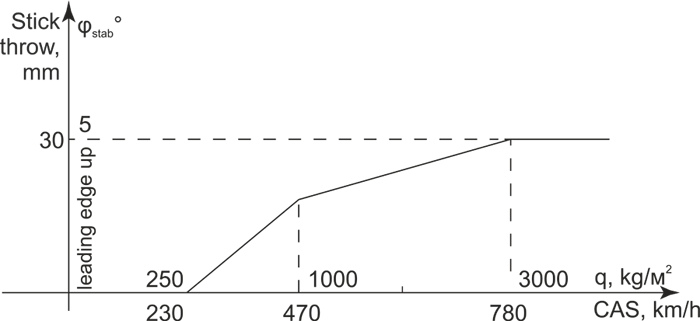
Stabilizer trimming (ST) – ram-air flow (CAS) diagram
This is a logic law of the FBW and is based on tick longitudinal deflection vs ram air pressure. This control law makes the pilot "feeling" of flying at an airspeed-stable aircraft. The law is also intended to increase the flight safety when decelerating. As the aircraft is neutrally stable by airspeed, it should increase the angle of attack in decelerated flight. The aforementioned control law prevents from this by deflecting stabilizers to decrease the AoA.
When accelerating, to keep the aircraft level, it should be trimmed "nose down" as the airspeed increases.
Roll control is performed by flaperons working as ailerons (flaperons are also deflected down as flaps when in the takeoff-landing mode) and by differential stabilization. With increased angle of attack, the rudders are used to control roll (see Directional channel).
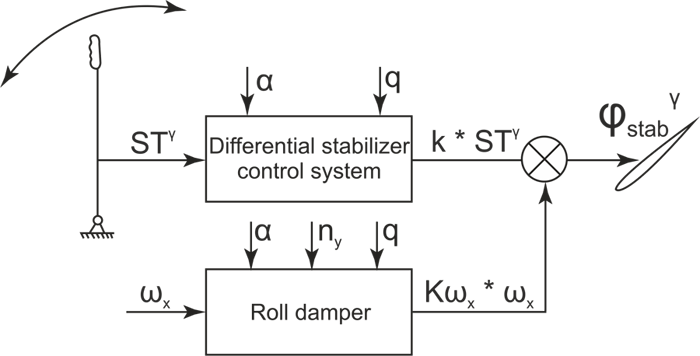
Lateral channel stabilizer control schematic block diagram
The flaperons and rudders belong to the mechanical part of the control system. The lateral channel of the fly-by-wire system, which includes differential control mechanism and roll damper, controls the differential stabilizer deflection.
The differential control mechanism is actuated by side stick inputs and provides differential stabilizer deflection. The degree of this deflection depends on the indicated airspeed and angle of attack.
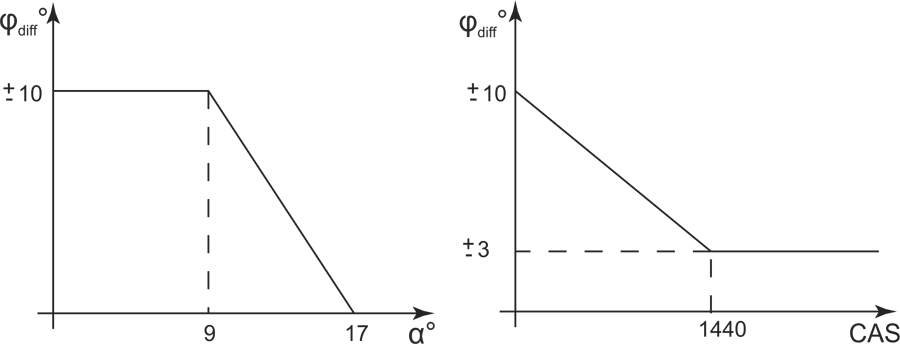
AoA and CAS correction of the differential stabilizer
Reduction of differential stabilizer deflection as V increases excludes large loads on the fuselage tail section at high indicated airspeeds and their reduction with the angle of attack increase excludes manifestation of roll yaw reversal.
The roll damper provides differential stabilizer deflection by roll rate, and it is intended to counteract short-period, roll oscillations.
As indicated airspeed increases at low-to-medium altitude, the maximum roll rate ωх max is increased, reaching the highest value within an indicated airspeed of 600...800 km/h. Here, the maximum ease of the lateral aircraft control is observed.
With a further increase of the indicated airspeed, the lateral handling gradually deteriorates, which becomes noticeable at airspeeds greater than 1200 km/h.
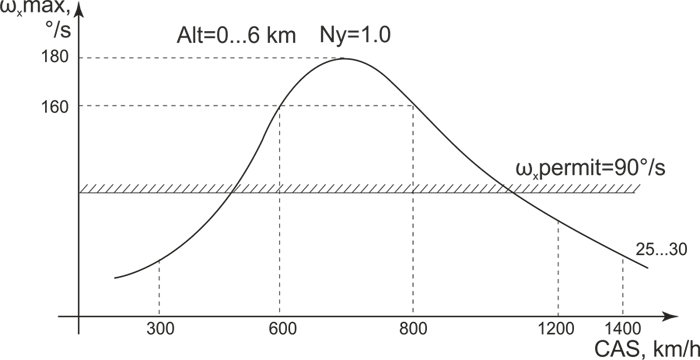
Roll rate – CAS diagram
Such dependence of the lateral handling based on indicated airspeed is accounted for by the following factors: