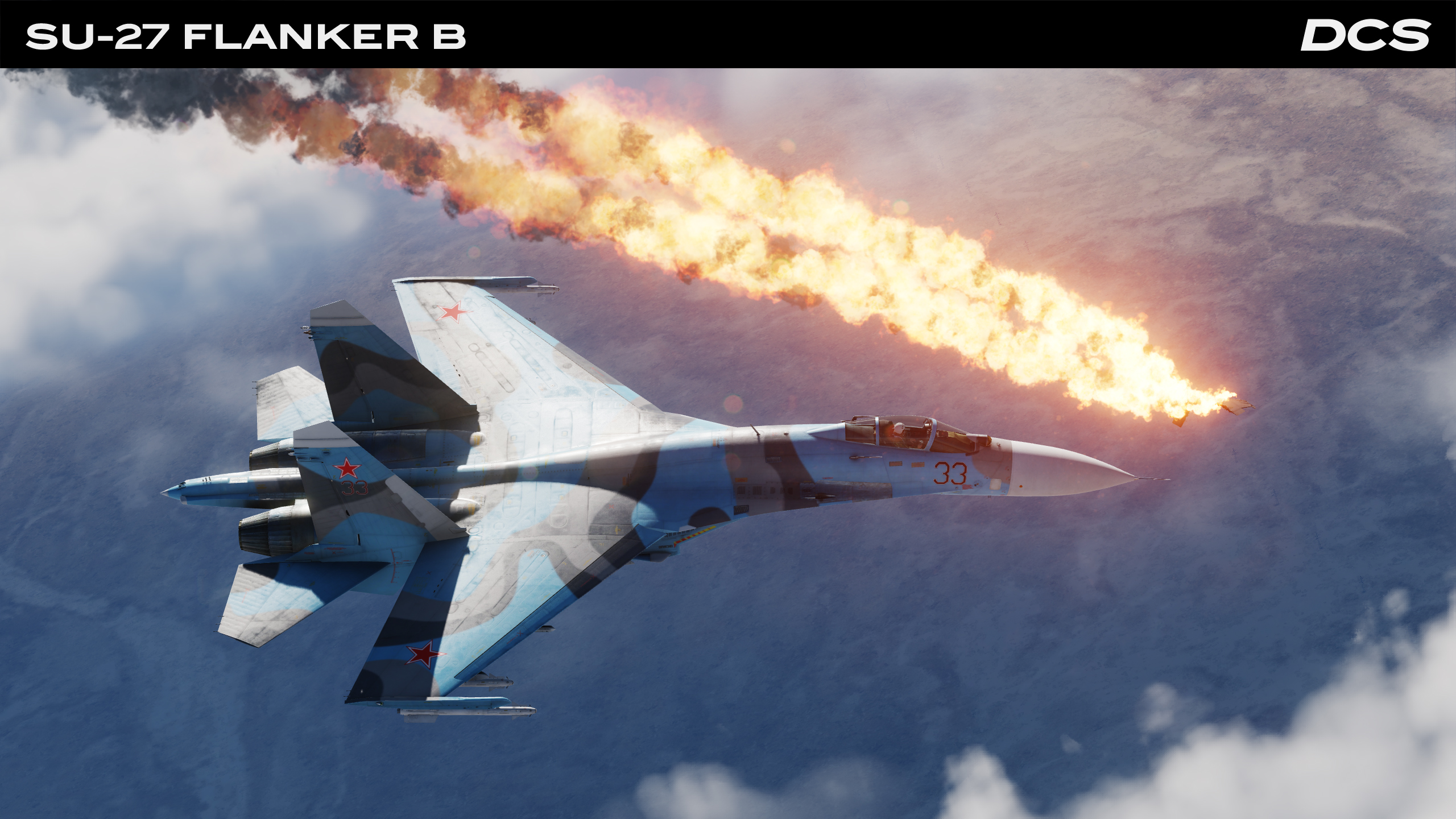
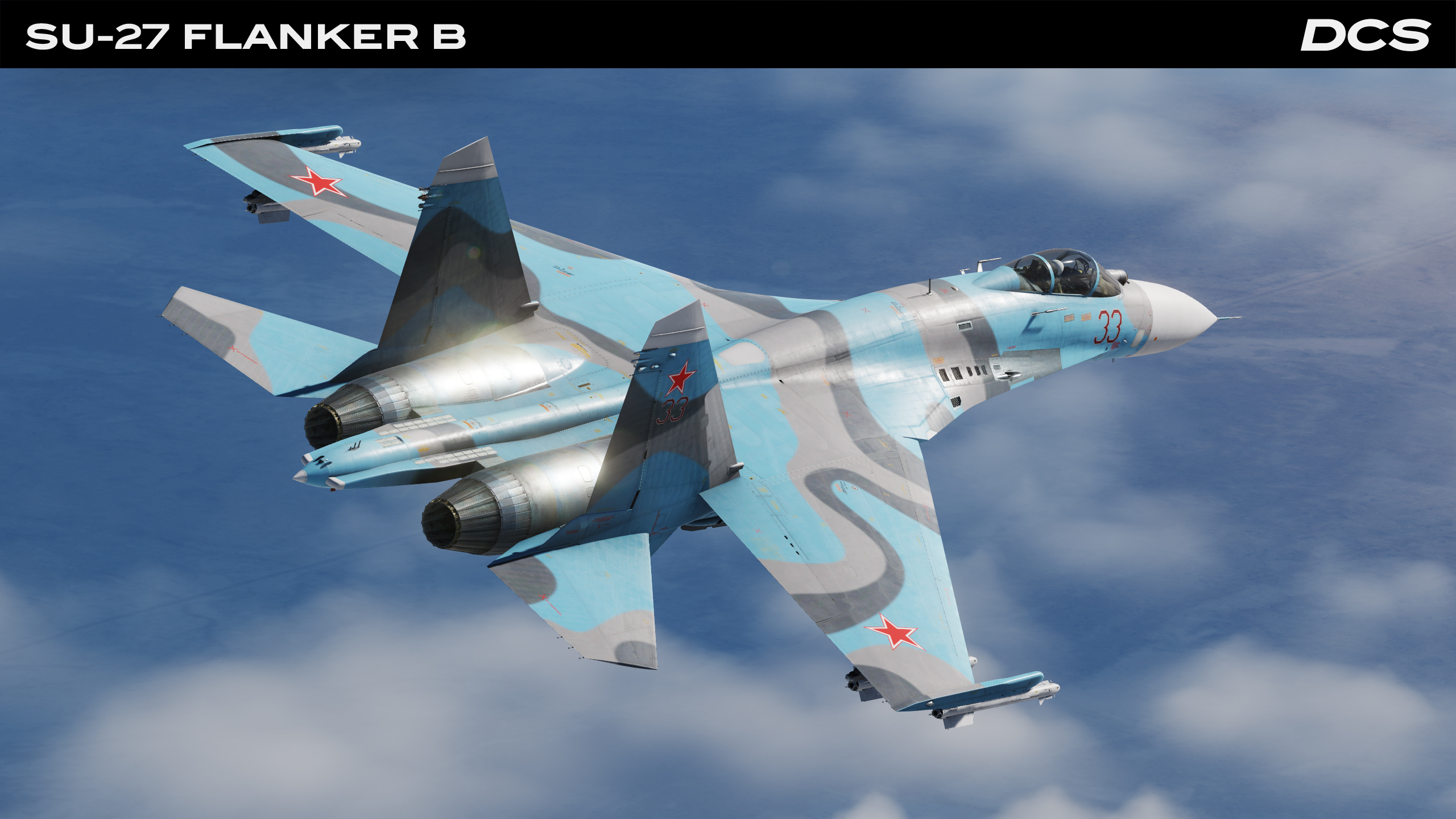
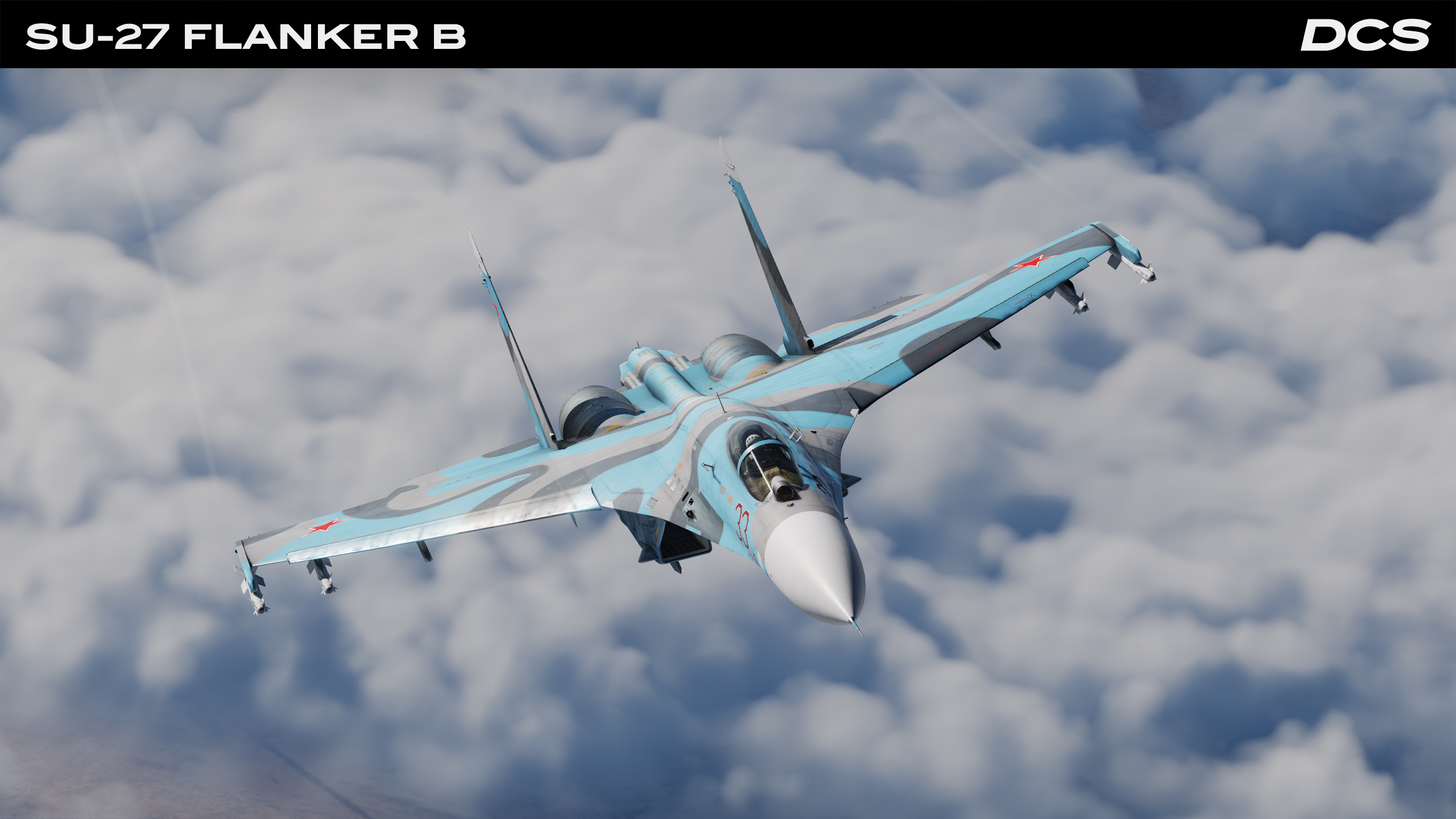
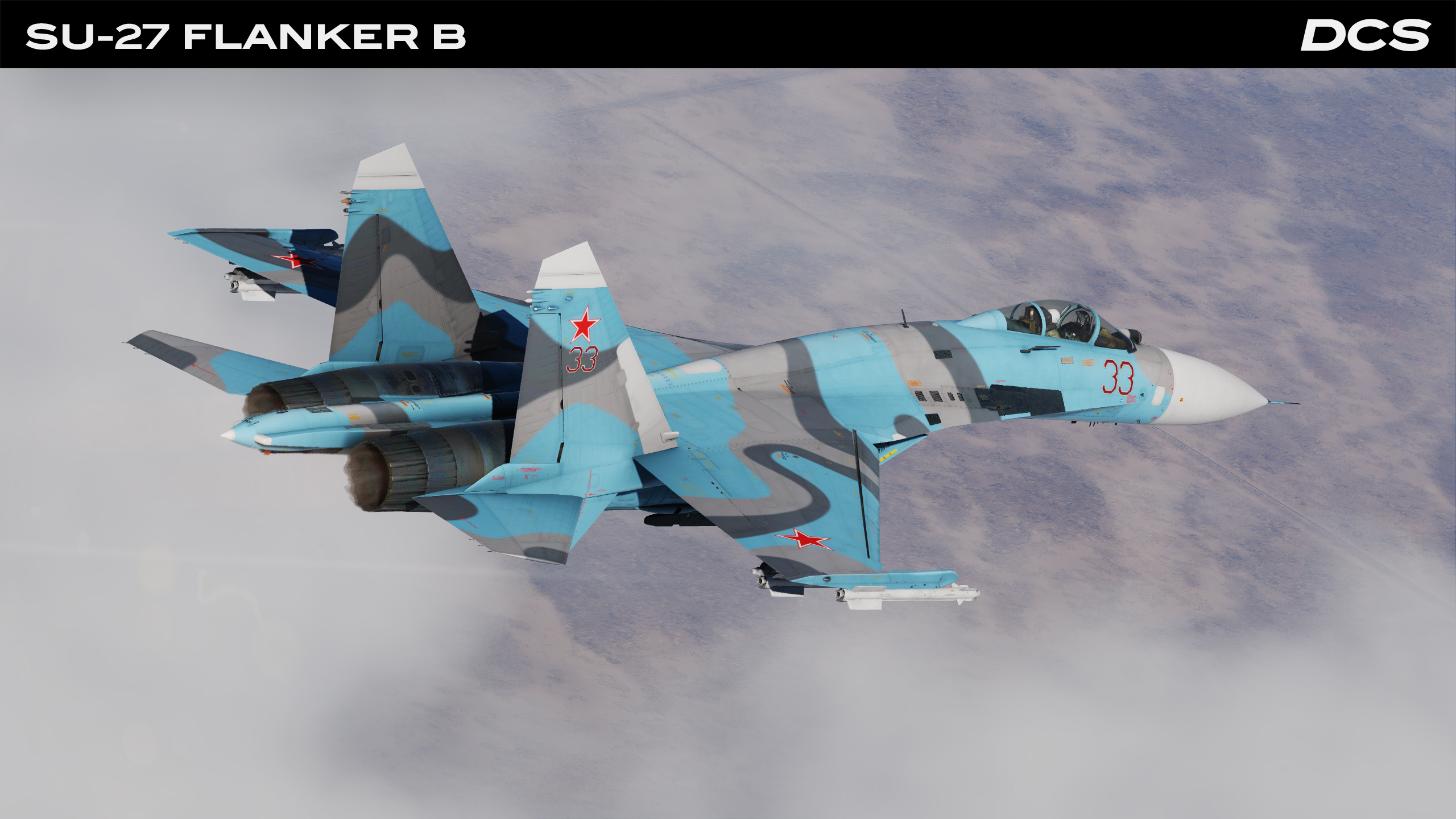
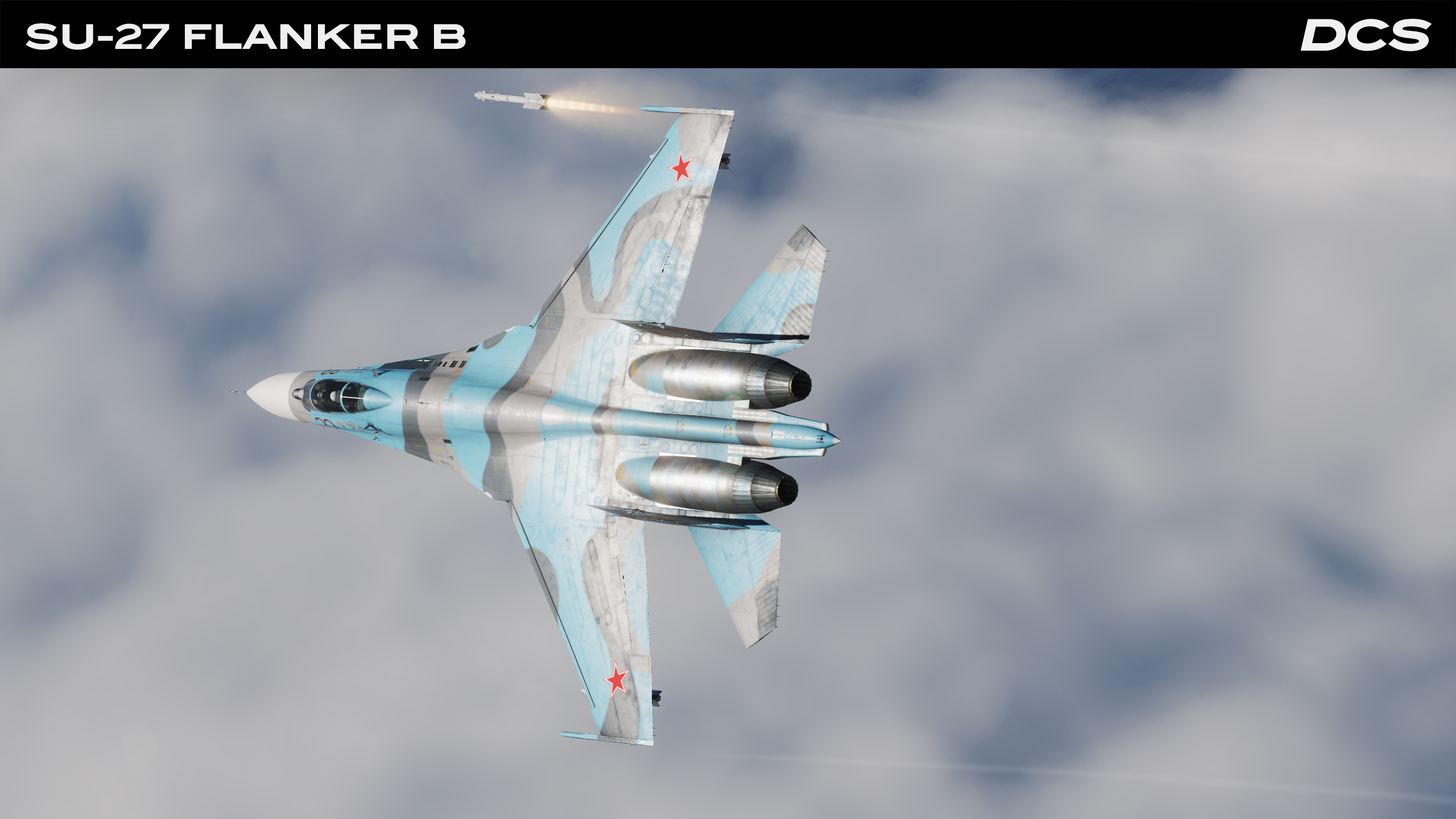
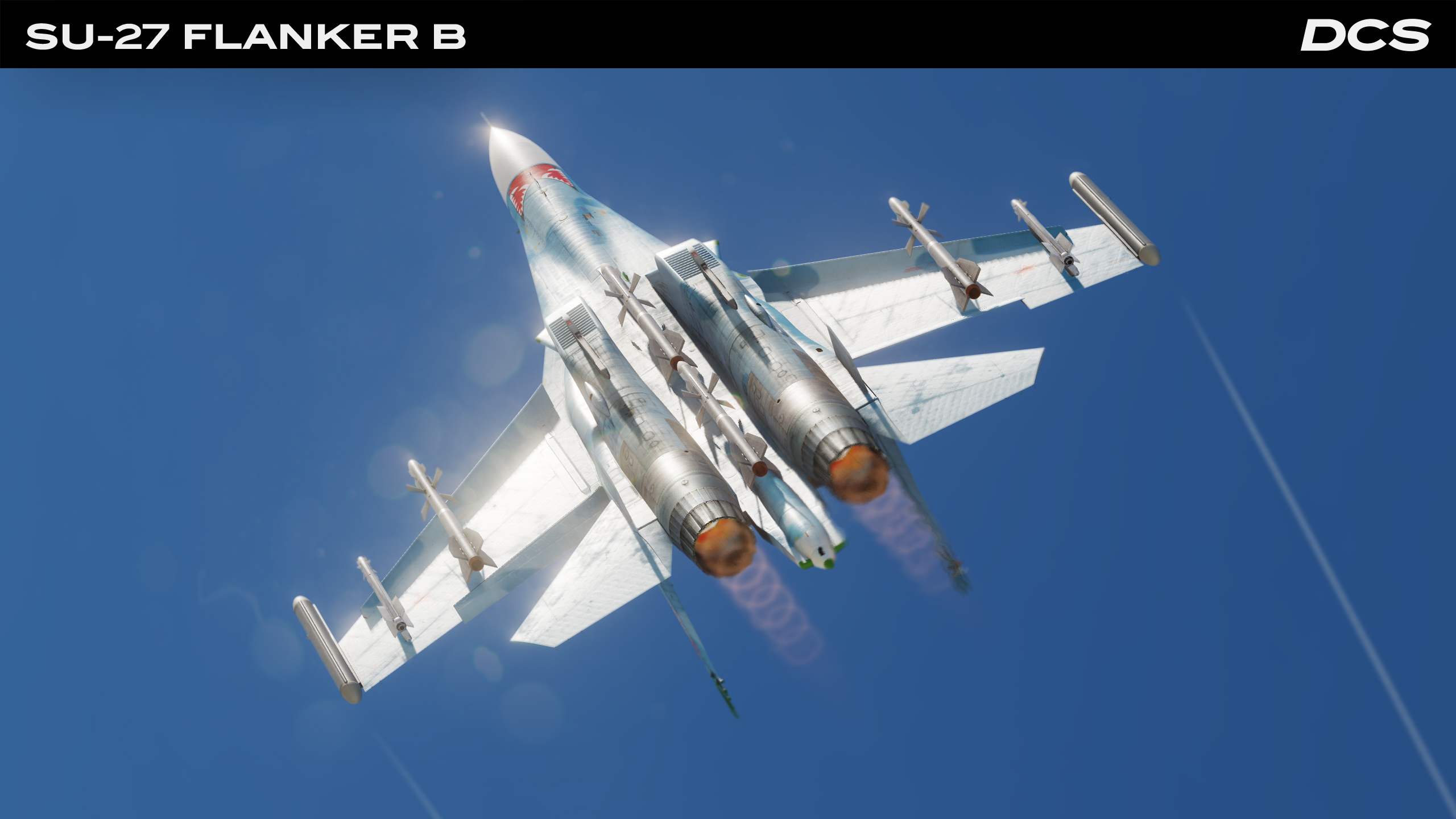
Su-27,北约代号"侧卫",是俄罗斯现代军事航空的支柱之一。设计的原因是用于以对抗美国的F-15战斗机。"侧卫"是一款超音速、高机动性的空优双发战斗机。"侧卫"既能能够侦察到的远远超出可视范围的目标,也能基于它惊人的低速性和大迎角机动性在格斗中拥有巨大优势。利用其雷达和隐秘的红外搜索跟踪系统,"侧卫"可以使用很多雷达和红外制导的导弹。"侧卫"还带有一个头盔瞄准,让你能通过看向目标并锁定它!除了其强大的空对空的能力,"侧卫"也可以配备炸弹和非制导火箭弹进行对地攻击。
作为怒火危崖系列,DCS怒火危崖: Su-27侧重于易操作性,而无需复杂的驾驶舱互动。这样可以显著降低学习难度。因此,DCS怒火危崖: Su-27提供基于键盘和操纵杆的专注于任务的驾驶舱系统的相关指令。
Directional yaw control is performed by symmetrical deflection of the rudders. Transmission of inputs from pedals to the rudders is conducted by means of a mechanical linkage. Additionally, yaw sub-channel servo units of the fly-by-wire system are mechanically connected to the rudders with half-travel authority.

Directional channel rudder control schematic block diagram
The yaw sub-channel of the fly-by-wire system includes the following automatic devices:
Roll-Yaw crossfeed system operates in accordance with side stick inputs. It deflects the rudders to the same side as the control stick. This eliminates adverse sideslip caused by the difference in drag by half-wings. It also improves a lateral controllability, especially at high angles of attack.

Rudder – AoA diagram
Due to this, lateral control is preserved up to an angle of attack of 28 degrees and there is no roll reversal due to control stick movement.
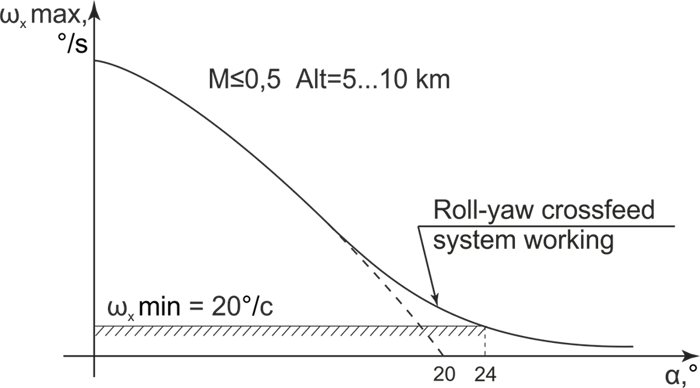
Roll rate – AoA diagram
Yaw stability system operates in accordance with lateral acceleration inputs and it provides required characteristics for aircraft yaw stability due to the aircraft having relaxed statistic yaw stability. This is due to the peculiar properties of the Su-27’s aerodynamic configuration aft of the center of gravity, elongated lateral wing area of the fuselage, and forward fin displacement. The operating principle of the Su-27’s yaw stability system is similar to that of the pitch stability augmentation system.
Yaw damper provides the required characteristics needed for lateral dynamic stability.
In order to decrease loads on the fins and the aft fuselage as a whole at the speeds of over 600 km/h, and when the landing gear is up, a spring mechanism is connected to the directional control system providing for the locking stop in the mid-travel of the pedals to each side. It is forbidden to override the locking stop of the pedals at the airspeeds over 600 km/h. This is why pedal travel at these speeds is reduced by half in this simulation.
The powerplant of the Su-27 includes two АЛ-31Ф (AL-31F) engines, each of which has its own turbine starter ГТДЭ-117 (GTDE-117). Because both engine have a separate starter, both individual and simultaneous starting of both engines is possible.
In order to start the engines on the ground, one should:
After this, the engine starter doors will open, the door limit switch actuates and puts the starter circuit into operation. Based on the starter circuit command, fuel is provided to the turbine starter and the annunciator "ЗАПУСК" (START) is lit in the cockpit.
The starter circuit turns on the electrical starter motor, ignites the turbine starter, and supplies oxygen to the turbine starter. After ten seconds, the turbine starter will turn off these accessories and simultaneously turns on ignition of the main chamber. The turbine starter spins up the engine rotor and the fuel control unit controls fuel flow to the main chamber. After ignition in the main chamber, the turbine comes into operation and accelerates the engine rotor together with the turbine starter. At 35% of the engine RPM, the ignition exciter in the main chamber switches off. At 53% of the engine RPM, or after 50 seconds, the turbine starter and starter circuit are switched off, which is indicated by the annunciator "ЗАПУСК" (START) turning off. The engine then reaches IDLE mode automatically.
The nozzle control system is intended to change the diameter of the exhaust nozzle in accordance with the desired law.
Before engine start, during the ignition and when in IDLE mode, the nozzles are completely open to provide the most favorable conditions for engine start: the greatest torque of the turbine, minimum overheating, and the minimum thrust during IDLE mode. When the throttle is moved forward to 77-81% of the engine RPM, the nozzles close partially in order to produce improved thrust characteristics. When the afterburner is switched on, the nozzles opens in order to maintain the turbine exhaust temperature. As the thrust augmentation ratio increases, the nozzles open.
When the landing gear is extended, the nozzles partially closed in order to preserve the power margin and to avoid nozzle contact with the runway during the touchdown. Due to this, the thrust is increased when on the glide path. In order to decelerate, the speedbrake should be used.